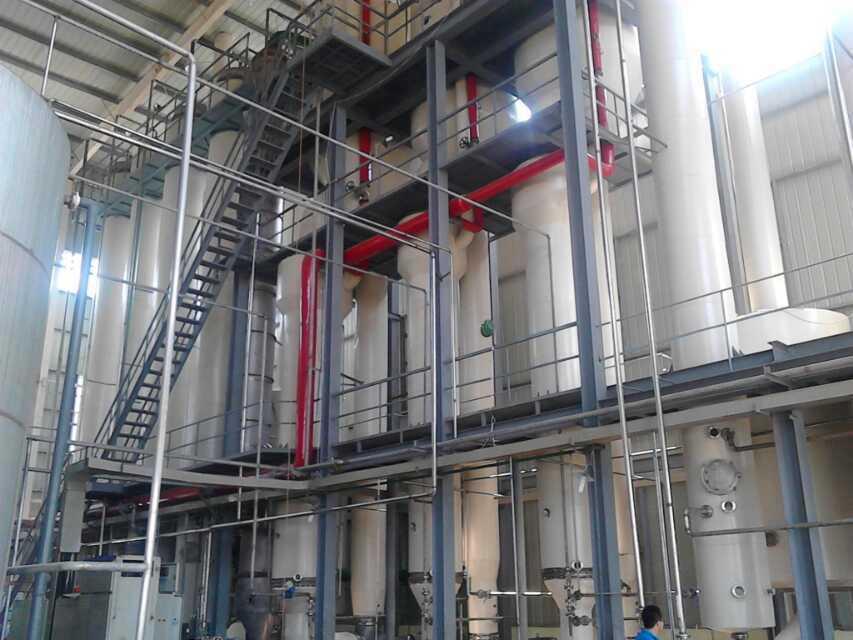
Overview of Evaporation Process
Evaporation is a fundamental separation process in chemical engineering, involving the transformation of a liquid into vapor through the removal of heat. Unlike simple evaporation, which occurs only at the liquid surface, boiling takes place when the liquid reaches its boiling point under specific operating pressure conditions. During boiling, vaporization occurs throughout the liquid phase while maintaining a relatively constant temperature and pressure. Both evaporation and boiling are categorized as vaporization processes.
In chemical production, evaporation operations are mainly applied for the following purposes:
① Concentration of Solutions
Evaporation is used to remove part of the solvent from a solution, producing a concentrated liquid product or an intermediate product for further processing.
② Evaporation Combined with Crystallization
By continuously removing solvent through evaporation, the solution can be concentrated to a saturated state. Subsequent cooling promotes the precipitation of solid crystals, enabling the recovery of solid products through an integrated evaporation–crystallization process.
③ Solvent Recovery and Purification
Evaporation can also be applied to separate and recover the solvent, leaving behind the concentrated solute or obtaining a purified solvent stream.
Evaporation processes can be operated in either batch or continuous modes. In industrial applications, particularly for large-scale chemical production, continuous evaporation systems are commonly adopted due to their stable operation, high efficiency, and suitability for large material throughput.
With advanced evaporation technologies such as MVR (Mechanical Vapor Recompression), TVR (Thermal Vapor Recompression), and multi-effect evaporation systems, modern industrial evaporation solutions can achieve significant energy savings, improved process efficiency, and reliable operation across various chemical and environmental applications.
Evaporation Equipment and System Configuration
An industrial evaporation system is not simply a single heat exchanger but an integrated process unit consisting of multiple components designed for efficient heat transfer, vapor separation, condensation, and material circulation.
A typical evaporation system mainly includes:
1. Evaporator
The evaporator is the core heat transfer component where the feed solution is heated and part of the solvent is converted into vapor. According to different material characteristics and operating requirements, various evaporator designs can be selected:
Suitable for low-viscosity solutions and heat-sensitive materials. The liquid forms a thin film flowing downward along the heating surface, providing high heat transfer efficiency and short residence time.
• Forced Circulation Evaporator
Designed for high-concentration, high-viscosity, or crystallizing solutions. A circulation pump maintains a high flow velocity through the heat exchanger, preventing scaling and improving operational stability.
• Rising Film Evaporator
Suitable for low-viscosity liquids with good flow characteristics. Vapor generated inside the heating tubes drives liquid circulation upward.
• Plate Evaporator
Featuring a compact structure and high heat transfer coefficient, suitable for applications requiring space-saving designs.
2. Vapor Separator
The vapor separator separates generated vapor from the concentrated liquid. Through optimized internal design, entrained droplets are removed to prevent product loss and protect downstream equipment.
Different separator configurations can be selected according to process requirements, including:
• Conical vapor separators
• Elliptical separators
• Cyclone-type separators
• High-efficiency mist elimination systems
3. Vapor Reuse and Heat Recovery System
During the evaporation process, a large amount of secondary vapor is generated from the evaporation of the solvent. Instead of being discharged as waste heat, this secondary vapor can be efficiently recovered and reused as a heating source through advanced vapor recompression and heat recovery technologies.
The vapor reuse system is designed to maximize energy utilization by recovering the latent heat contained in secondary vapor. Depending on the process requirements and available energy sources, different configurations can be applied:
• Direct Steam Heating System
Fresh steam is supplied as the primary heating source to transfer heat through the evaporator. This configuration is widely used for simple evaporation processes or applications with sufficient steam availability.
• Thermal Vapor Recompression (TVR) System
A steam ejector is used to mix high-pressure motive steam with secondary vapor generated from the evaporator. The recompressed vapor is then reused as the heating medium, reducing fresh steam consumption.
• Mechanical Vapor Recompression (MVR) System
A mechanical compressor increases the pressure and temperature of secondary vapor, allowing it to be recycled as the heating source for continuous evaporation. MVR technology provides excellent energy efficiency and significantly reduces operating costs.
• Multi-Effect Evaporation (MEE) System
Multiple evaporator effects are arranged in series, allowing the secondary vapor generated from one effect to serve as the heating source for the next effect. This cascade vapor utilization greatly improves steam economy.
Through effective recovery and reuse of secondary vapor, modern evaporation systems can achieve significant reductions in steam consumption, lower operating costs, and improved overall energy efficiency.
4. Condensation and Vacuum System
For low-temperature evaporation or heat-sensitive materials, evaporation is usually performed under vacuum conditions to reduce the boiling point and minimize thermal degradation.
The vacuum system generally consists of:
• Vacuum pumps or steam ejectors
• Condensers
• Cooling water circulation systems
• Non-condensable gas removal systems
5. Circulation, Control, and Automation System
Modern evaporation plants are equipped with automated control systems to ensure stable operation and optimized energy consumption. The control system typically includes:
• PLC-based automatic control
• Temperature, pressure, and flow monitoring
• Concentration control
• Automatic cleaning and protection functions
• Remote monitoring and data recording
Customized Evaporation Solutions
Due to differences in material properties, concentration requirements, corrosion conditions, and energy availability, evaporation systems require customized engineering design.
We, ENCHEM TECHNOLOGY provides complete evaporation solutions including:
• Process design and optimization
• Equipment design and selection
• Evaporator and crystallizer manufacturing
• Material selection and corrosion evaluation
• Automation and control integration
• Installation guidance and commissioning support
Our evaporation systems are widely applied in chemical production, inorganic salt recovery, lithium industry, wastewater treatment, food processing, and other industrial fields, providing efficient, reliable, and sustainable separation solutions.
Contact Us
Reach out to an optimized proposal