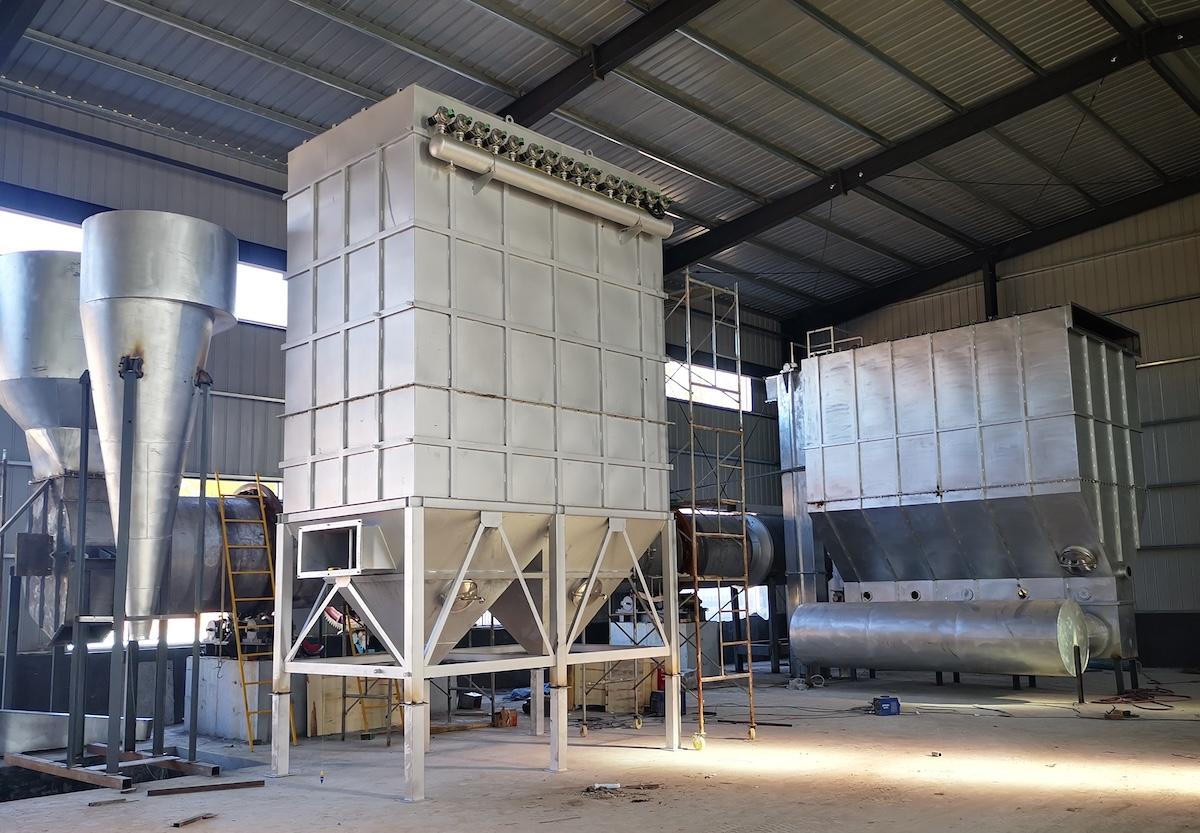
Resource Recovery of Magnesium Sulfate from Magnesium Oxide Flue Gas Desulfurization
Magnesium oxide (MgO)-based flue gas desulfurization (FGD) is a widely used wet desulfurization technology. In this process, magnesium oxide absorbs sulfur dioxide (SO₂) from flue gas. Following oxidation, a desulfurization solution containing magnesium sulfate as the main component is obtained.
To recover valuable resources from desulfurization by-products, conventional processes typically employ evaporation, cooling crystallization, centrifugal separation, and drying to produce magnesium sulfate heptahydrate (MgSO₄·7H₂O) crystals.
However, due to variations in magnesium oxide raw material quality, flue gas composition, and desulfurization operating conditions, the resulting magnesium sulfate solution usually contains small amounts of soluble salts and other impurities.
During the cooling crystallization of magnesium sulfate heptahydrate, these impurities may gradually accumulate in the circulating mother liquor. To maintain stable crystallization performance and consistent product quality, a portion of the mother liquor generally needs to be discharged periodically or continuously.
This not only results in magnesium sulfate losses but also increases the burden of treating high-salinity wastewater.
To address this challenge, an alternative approach is to optimize both the product selection and production process: using spray granulation fluidized-bed drying technology to directly produce industrial-grade magnesium sulfate monohydrate (MgSO₄·H₂O), instead of magnesium sulfate heptahydrate through conventional cooling crystallization.
This approach can eliminate the mother liquor discharge associated with conventional crystallization processes.
Mother Liquor Discharge Challenges in Conventional Magnesium Sulfate Heptahydrate Production
The conventional production process for magnesium sulfate heptahydrate generally consists of the following steps:
Magnesium Sulfate Solution → Evaporation and Concentration → Cooling Crystallization → Centrifugal Separation → Drying → Magnesium Sulfate Heptahydrate
During cooling crystallization, magnesium sulfate crystallizes from the solution in the form of heptahydrate crystals. The crystals are subsequently separated from the mother liquor using a centrifuge.
The separated mother liquor is typically recycled back into the crystallization system to improve magnesium sulfate recovery.
However, some soluble impurities in the desulfurization solution do not crystallize together with magnesium sulfate heptahydrate. Instead, they gradually accumulate in the circulating mother liquor.
As operation continues, the concentration of these impurities may increase, potentially affecting crystallization performance and product quality.
The main challenges include:
• Impurity Accumulation: Soluble salts gradually accumulate in the circulating mother liquor, potentially reducing the purity of magnesium sulfate heptahydrate.
• Deterioration of Crystallization Performance: Impurities may interfere with the crystallization process and, in severe cases, inhibit crystal formation.
• Increased Operational Complexity: Changes in mother liquor composition may increase the risk of scaling and make process parameter control more difficult.
• Mother Liquor Discharge and Resource Losses: To control impurity concentrations, a certain portion of the mother liquor must be discharged. Since the discharged mother liquor still contains significant amounts of magnesium sulfate, this results in valuable material losses and additional wastewater treatment costs.
Therefore, for magnesium sulfate solutions derived from MgO-based flue gas desulfurization that contain certain impurities, conventional cooling crystallization may not always be the most suitable resource recovery solution.
Spray Granulation Fluidized-Bed Drying Process for Magnesium Sulfate Monohydrate Production
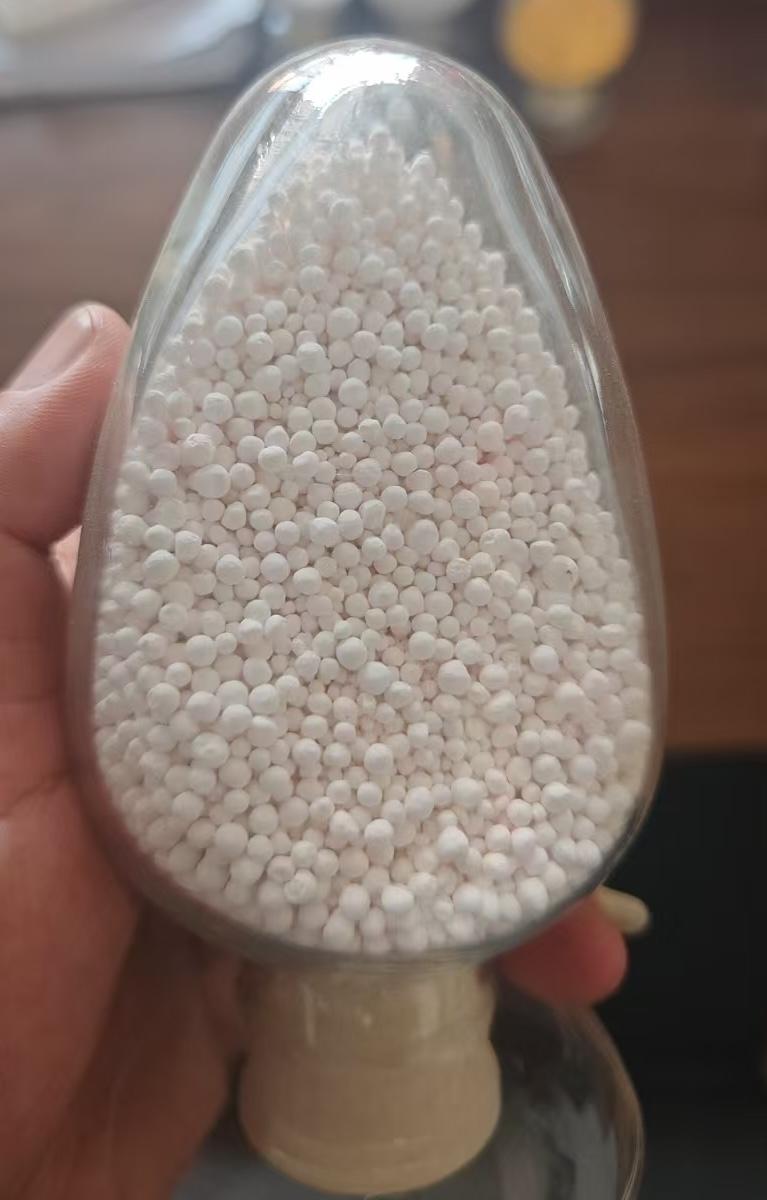
Magnesium sulfate monohydrate sample
For magnesium sulfate solutions obtained from MgO-based flue gas desulfurization, conventional spray granulation and fluidized drying can be used to produce powdered magnesium sulfate monohydrate and granular magnesium sulfate monohydrate.
Spray granulation fluidized-bed drying technology integrates solution atomization, particle growth, and drying into a continuous process, making it particularly suitable for producing granular products.
Process Flow
Magnesium Sulfate Solution → Pretreatment → Spray Granulation Fluidized-Bed Drying → Particle Screening → Product Cooling → Magnesium Sulfate Monohydrate
Depending on the initial solution concentration and available energy sources, an evaporation pre-concentration system may be installed upstream of the spray granulation dryer to reduce the water evaporation load and energy consumption of the drying system.
Process Description
The magnesium sulfate solution, concentrated to the required concentration, is pumped into a high-temperature solution holding tank.
From there, the solution is delivered by an atomization pump to the spray granulation fluidized-bed dryer, where granulation and drying take place simultaneously.
Most of the dried granules are discharged into a cooling unit before being transferred to the finished-product storage silo for subsequent packaging. A small portion of the fine powder is collected and recovered for further processing.
Throughout the process, the magnesium sulfate solution feed rate is automatically regulated to maintain stable operating conditions.
Clean, high-temperature air serves as the drying medium. Inside the spray granulation dryer, the hot air comes into direct contact with the atomized magnesium sulfate solution, providing the heat required for moisture evaporation, granule formation, and drying.
The exhaust gas is treated through a compartmentalized pulse-jet bag filter system to recover entrained fine particles and reduce dust emissions. The cleaned exhaust gas is then discharged through the induced draft fan.
Main Features and Advantages
• High-Quality Granular Products
The system is designed to produce uniform granules with smooth surfaces, good hardness, and an adjustable particle size, typically ranging from 1 to 3 mm.
• Continuous and Automated Operation
The process is designed for continuous production, with automatic control of liquid feeding, material handling, and key operating parameters.
Under normal operating conditions, the system can operate with minimal manual adjustment.
• Efficient Dust Collection and Material Recovery
A compartmentalized pulse-jet bag filter is employed to recover fine particles while maintaining efficient dust removal.
With appropriate design and filter media selection, the exhaust gas treatment system can be configured to meet applicable environmental emission requirements.
• Simple Equipment Structure and Low Maintenance Requirements
The system features a relatively simple equipment arrangement with fewer operating points.
The main dryer is designed for reliable operation, while auxiliary equipment primarily consists of proven, conventional material-handling machinery, helping reduce routine maintenance requirements.
• Flexible Production of Granular and Powdered Products
The system offers flexibility in product form. With appropriate modifications to the atomization system and operating configuration, it can be adapted for conventional spray drying or spray granulation applications.
This enables the production of granular or powdered magnesium sulfate monohydrate according to different market requirements.
Comparison Between Magnesium Sulfate Heptahydrate Crystallization and Magnesium Sulfate Monohydrate Spray Drying
| Comparison Item | Magnesium Sulfate Heptahydrate Cooling Crystallization | Magnesium Sulfate Monohydrate Spray Drying |
| Target product | MgSO₄·7H₂O | MgSO₄·H₂O |
| Main process | Evaporation and cooling crystallization | Spray granulation fluidized-bed drying |
| Cooling crystallization | Required | Not required |
| Centrifugal separation | Required | Not required |
| Crystallization mother liquor circulation | Present | Not required |
| Crystallization mother liquor discharge | May be required | No crystallization mother liquor generated |
| Impurity handling | Some impurities remain in the mother liquor | Some impurities remain in the solid product |
| Product form | Crystals | Powder or granules |
| Operating mode | Continuous or batch | Continuous operation |
Both processes have their own suitable applications and technical advantages.
Magnesium sulfate heptahydrate cooling crystallization generally offers advantages in terms of energy consumption. Compared with the direct production of magnesium sulfate monohydrate by spray granulation drying, cooling crystallization typically requires less water evaporation and therefore has lower overall energy consumption.
It is particularly suitable for projects targeting magnesium sulfate heptahydrate crystals with specific product purity requirements.
Although magnesium sulfate monohydrate spray granulation drying generally requires higher energy consumption, it offers distinct advantages when processing magnesium sulfate solutions containing small amounts of impurities.
For projects targeting industrial-grade magnesium sulfate monohydrate, where the impurity levels meet the required product specifications, this process eliminates the need for cooling crystallization and centrifugal separation.
As a result, it avoids mother liquor circulation and discharge, reduces magnesium sulfate losses, and minimizes the burden of high-salinity wastewater treatment.
Therefore, the selection of an appropriate production process should consider not only energy consumption but also raw material composition, target product specifications, and mother liquor treatment costs.
Conclusion
For magnesium sulfate recovery projects associated with flue gas desulfurization, selecting the appropriate product and production technology is essential for improving resource utilization, optimizing plant operation, and reducing wastewater treatment requirements.
Contact us to learn more about our magnesium sulfate evaporation, crystallization, spray granulation, and drying technologies, and explore the most suitable solution for your project.
Contact US
Enchem is here to listen to your needs and provide sustainable solutions. Contact us to discover more.