• Home
  • About Us
  • Products
    • MVR Evaporator
    • MEE Evaporator
    • Distillation & Concentration Unit
    • Complete Equipment
  • Featured Project
    • Chemical Industry
    • Lithium Battery Industry
    • Wastewater Treatment
    • Food & Pharmaceutical
  • Blog
  • Contact
  • Download

Multiple-effect Evaporator (MEE)

Home Product MEE Evaporator Multiple-effect Evaporator (MEE)

Multiple-effect Evaporator (MEE)

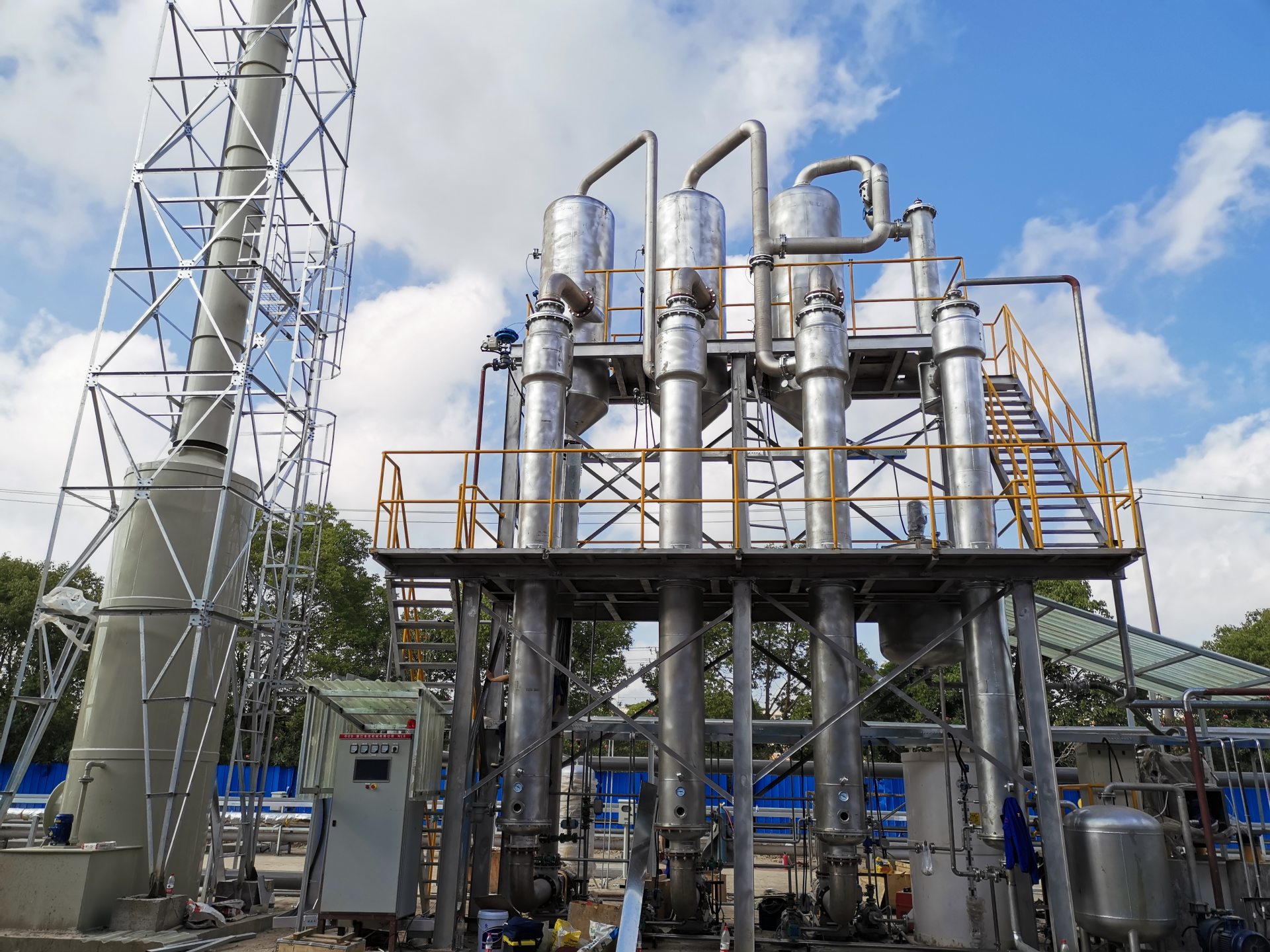
A multiple-effect evaporator (MEE) is a highly energy-efficient evaporation system that concentrates liquids by reusing secondary vapor generated during the evaporation process. By operating multiple evaporator effects in series at progressively lower pressures, the system maximizes heat recovery, significantly reduces live steam consumption, and lowers operating costs.

Multiple-effect evaporators are widely used in the food, chemical, pharmaceutical, pulp and paper, desalination, and environmental industries for liquid concentration, solvent recovery, crystallization, and industrial wastewater treatment.

With customized process configurations, including falling film, forced circulation, rising film, and hybrid designs, multiple-effect evaporators provide reliable, continuous, and cost-effective solutions for a wide range of industrial applications.
MEE Evaporator2025-05-25e22 Tags: MEE

Description

What Is a Multiple-Effect Evaporator?

Evaporation systems can be classified into single-effect and multiple-effect evaporators, depending on whether the secondary vapor generated during evaporation is reused as the heating medium for another evaporator.

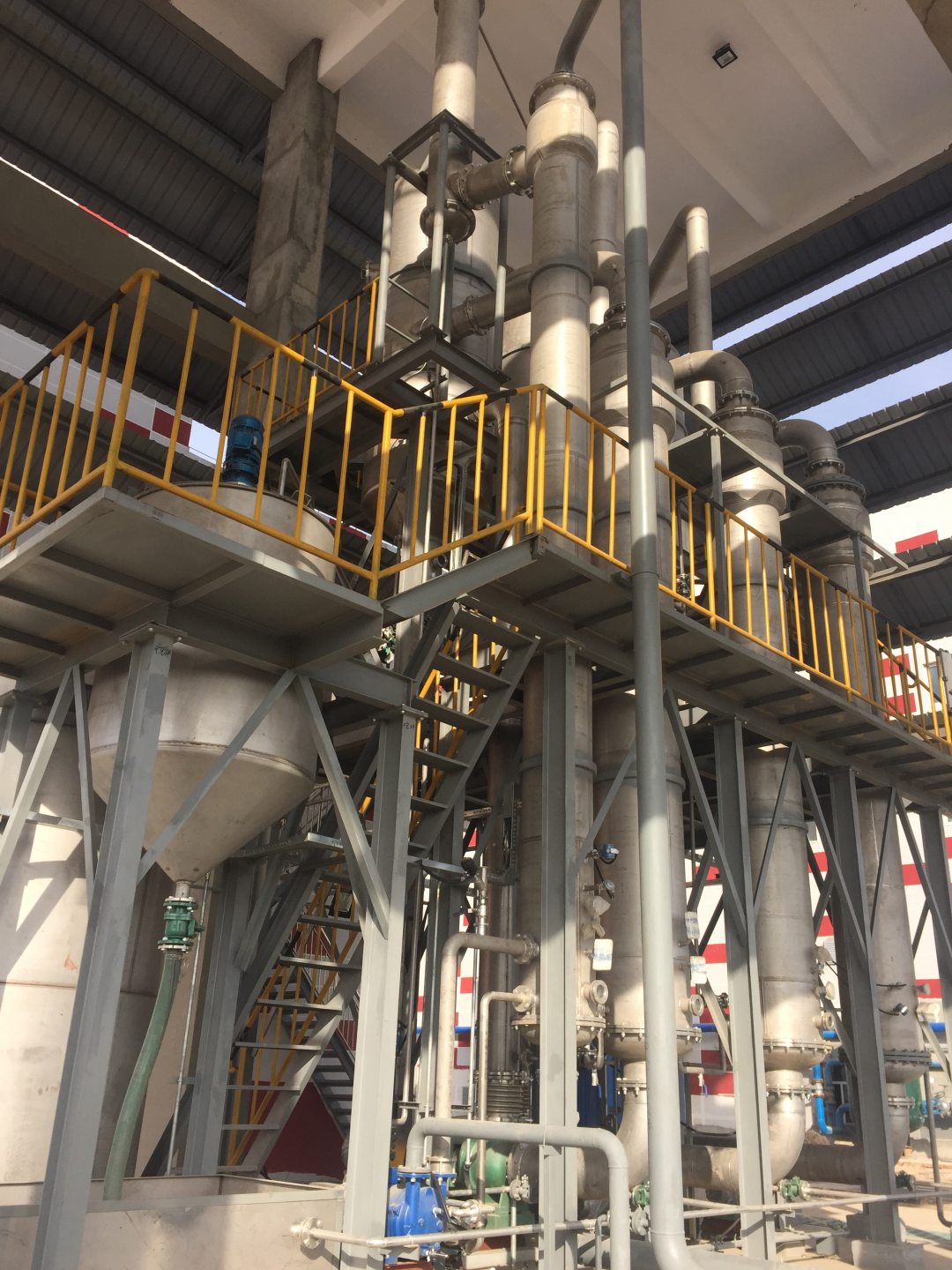
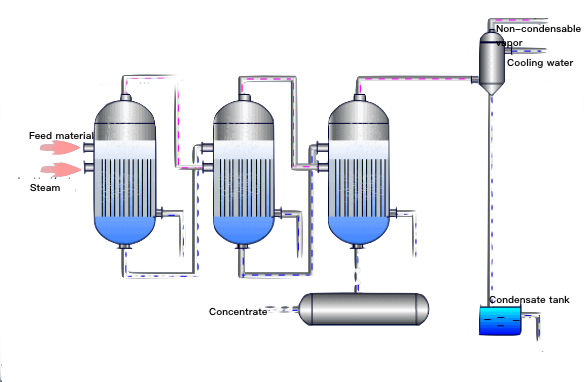
A multiple-effect evaporator (MEE) consists of two or more evaporator effects connected in series. The secondary vapor generated in one effect is utilized as the heating steam for the subsequent effect, allowing the latent heat to be reused multiple times. This significantly reduces live steam consumption, improves thermal efficiency, and lowers operating costs compared with a single-effect evaporator.

Because of their excellent energy efficiency, multiple-effect evaporators are widely used in industrial concentration and solvent recovery processes that require the evaporation of large volumes of water.

Working Principle

During the evaporation process, a large quantity of secondary vapor is generated, containing substantial latent heat. Instead of being discharged directly, this thermal energy is recovered and reused in a multiple-effect evaporation system.

The feed solution is heated in the first effect by live steam, producing secondary vapor. This vapor is then introduced into the heating chamber of the second effect as its heat source. Since each subsequent effect operates at a progressively lower pressure and boiling temperature, the secondary vapor from the previous effect can continue to provide sufficient heat for evaporation.

This cascading reuse of vapor continues through each effect, maximizing heat recovery and significantly reducing the amount of fresh steam required. As a result, multiple-effect evaporation offers excellent steam economy, high energy efficiency, and reduced operating costs.

System Configuration

A typical multiple-effect evaporator consists of:

• Multiple evaporator effects connected in series

• A condenser

• A vacuum system

• Feed and discharge pumps

• Heat exchangers

• Instrumentation and automatic control system

• Other auxiliary equipment

The system operates continuously with continuous feed and product discharge, ensuring stable production, high productivity, and consistent product quality.

Depending on product characteristics and process requirements, multiple-effect evaporators can be designed in various configurations, including:

• Falling film evaporator

• Rising film evaporator

• Forced circulation evaporator

• Natural circulation evaporator

• Plate evaporator

Hybrid configurations combining different evaporation technologies can also be adopted to achieve optimum performance, minimize fouling, and maximize energy efficiency.

Energy Consumption

The energy efficiency of a multiple-effect evaporator is commonly expressed by its steam economy (W/D), which represents the amount of water evaporated per unit of live steam consumed.

Number of Effects Single -effect Double -effect Triple-effect Four-effect Five-effect
W/D 0.91 1.75 2.5 3.33 3.70
Note: W/D= Water evaporated/ Live steam comsumed

A higher W/D value indicates better energy efficiency, as more water is evaporated using the same amount of fresh steam.

Although steam economy improves as the number of effects increases, the improvement is not directly proportional. This is because the available temperature difference becomes progressively smaller with each additional effect, limiting the practical number of effects for economic operation.

Advantages

• Excellent Energy Efficiency

By reusing secondary vapor as the heating source for subsequent effects, multiple-effect evaporators greatly reduce live steam consumption and operating costs.

• Lower Environmental Impact

Reduced steam consumption leads to lower fuel usage and carbon emissions, making multiple-effect evaporation an environmentally friendly solution.

• High Concentration Capability

Multiple-effect evaporators can achieve high concentration ratios while maintaining stable product quality, making them suitable for demanding industrial applications.

• Flexible Process Design

The system can be customized with different evaporation technologies, process arrangements, and operating conditions to accommodate various feed characteristics and production requirements.

• Continuous and Reliable Operation

Continuous feeding and discharge enable stable production with high operational reliability and low maintenance requirements.

Applications

Multiple-effect evaporators are widely used for concentrating solutions, recovering solvents, and reducing wastewater volume in numerous industries, including:

•  Desalination: Seawater concentration and fresh water production.

•  Food and Beverage: Fruit juices, dairy products, starch syrup, sweeteners, coffee, and plant extracts.

•  Chemical Industry: Chemical concentration, solvent recovery, and industrial wastewater treatment.

•  Pulp and Paper Industry: Black liquor concentration for chemical recovery and energy generation.

•  Pharmaceutical Industry: Concentration of pharmaceutical intermediates and medicinal solutions.

•  Environmental Protection: Treatment of industrial wastewater from chemical, pharmaceutical, metallurgy, mining, petrochemical, rare earth, lithium battery, and hazardous waste industries.

With customized engineering design, multiple-effect evaporators can be optimized for virtually any evaporation or concentration process.

Design Considerations

Every evaporation process has unique operating requirements. When designing a multiple-effect evaporator, our engineering team carefully evaluates factors such as:

•  Product characteristics and heat sensitivity

•  Required evaporation capacity and final concentration

•  Heat recovery and steam economy

•  Selection of suitable evaporation technology (falling film, rising film, forced circulation, natural circulation, or hybrid configuration)

•  Fouling tendency and the need for automatic CIP (Clean-in-Place) systems

•  Process automation, operational flexibility, and ease of maintenance

Based on these considerations, we provide customized evaporation solutions that maximize energy efficiency, product quality, operational reliability, and long-term economic performance.

If you have any requirements for evaporation, concentration, or crystallization systems, please feel free to contact us. Our engineering team will be pleased to provide a customized solution tailored to your specific process requirements.

Inquiry Us


Related Products

Forced-Circulation Evaporator

2024-03-31e22

Falling-Film Evaporator

2024-03-24e22

Five-effect Evaporator

2024-03-17e22

Product Categories

  • Product
    • MVR Evaporator
    • MEE Evaporator
    • Distillation & Concentration Unit
    • Complete Equipment
  • Featured Project
    • Lithium Battery Industry
    • Wastewater Treatment
    • Chemical Industry
    • Food & Pharmaceutical

Product Tags

CaCl2 concentrator crystallization Distillation evaporation Lithium Battery Industry MEE MVR wastewater treatment

Latest Post

  • Achieving Low Residual Moisture Content in Industrial Salt Crystallization Processes
    2026-05-27
  • Liquid Ring Vacuum Pumps in Evaporation System
    2026-04-24
  • Successful Commissioning of Instant Coffee Liquor 4-Effect Evaporator Upgrading Project in Indonesia
    2026-03-22

Email Newsletters

Welcome to subscribe email newsletter to us, get the lastest products and news information from us!

Contact Us

+86-135 875 13702

info@enchem-tech.com

info@enchem-tech.com

Zengdu District, Suizhou City, Hubei Province, China

Mobile Website

Copyright © 2012-2017 Wenzhou Enchem Technology Co.,Ltd. All Rights Reserved Design by enchem-tech.com