• Home
  • About Us
  • Products
    • MVR Evaporator
    • MEE Evaporator
    • Distillation & Concentration Unit
    • Complete Equipment
  • Featured Project
    • Chemical Industry
    • Lithium Battery Industry
    • Wastewater Treatment
    • Food & Pharmaceutical
  • Blog
  • Contact
  • Download

Triple-Effect Evaporator System for High-Salinity Wastewater from Rubber Accelerator NS Production

Home Featured Project Wastewater Treatment Triple-Effect Evaporator System for High-Salinity Wastewater from Rubber Accelerator NS Production

Triple-Effect Evaporator System for High-Salinity Wastewater from Rubber Accelerator NS Production

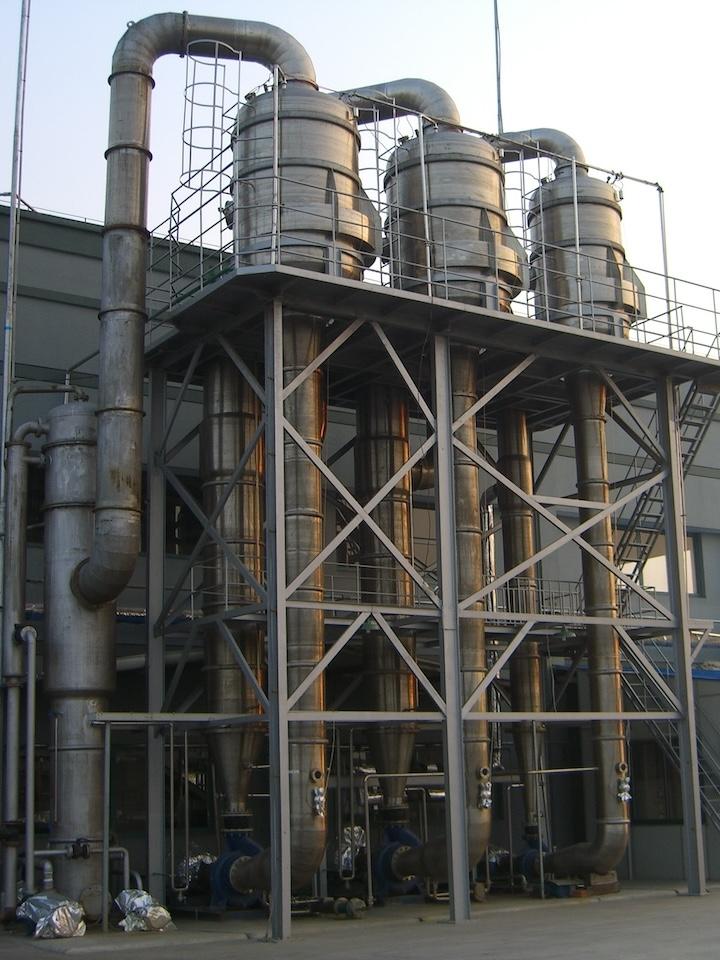
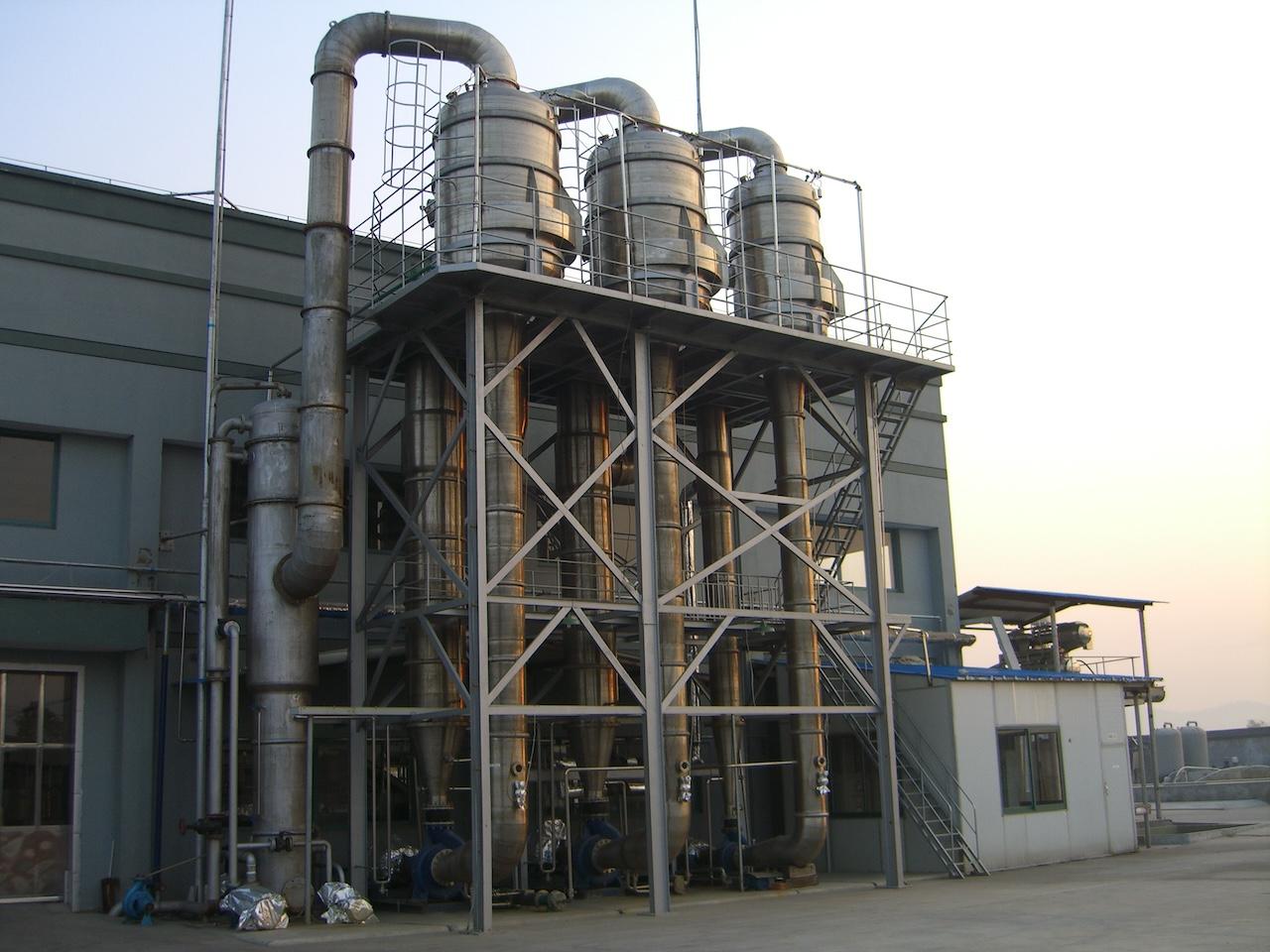
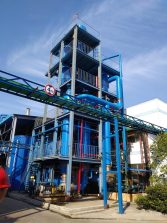
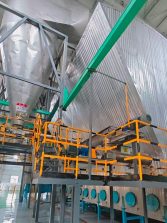
A triple-effect forced circulation evaporation and crystallization project designed for high-salinity and high-COD wastewater generated during rubber accelerator NS production, with a treatment capacity of 18 t/h.

The system incorporates specialized foam control structures, optimized salt crystallization, continuous salt discharge, and integrated mother liquor treatment to ensure stable operation and control condensate COD below 4,000 mg/L before subsequent biological treatment.
Wastewater Treatment2026-11-25e22 Tags: MEE, wastewater treatment

Description

Project Overview

This project was designed for the treatment of high-salinity wastewater generated during the production of rubber accelerator NS (TBBS).

The wastewater is characterized by high salt concentrations, high COD levels, complex organic compounds, and a strong tendency to foam during evaporation.

The main organic contaminants include benzothiazole and its derivatives, 2-mercaptobenzothiazole and its derivatives, N-tert-butyl-2-benzothiazolesulfenamide (TBBS), surfactants, and resins.

To address these challenges, ENCHEM designed a triple-effect forced circulation evaporation and crystallization system with optimized crystallization control, specialized foam separation structures, and an integrated mother liquor treatment system.

The system is designed to achieve efficient salt separation, control organic matter accumulation, and reduce the organic load of the condensate before subsequent biological treatment.
Main Design Parameters

Parameter Specification
Application Rubber accelerator NS production wastewater treatment
Evaporator Type Triple-effect forced circulation evaporator and crystallizer
Feed Material High-salinity wastewater from rubber accelerator NS production
Feed Capacity Approx. 18,000 kg/h
Evaporation Capacity Approx. 16,000 kg/h
Feed Concentration 12–14 wt.%
Feed COD 20,000–35,000 mg/L
Evaporator Outlet Condition Supersaturated crystalline slurry
Total Installed Power 270 kW
Condensate COD Below 4,000 mg/L
Final Wastewater Treatment Subsequent biological treatment

Process Configuration

The system adopts a triple-effect forced circulation evaporation and crystallization process, comprising the following main sections:

•  Forced circulation evaporation and crystallization system;

•  Condensate collection system;

•  Vacuum system;

•  Non-condensable gas extraction system;

•  Mother liquor post-treatment system.

All three effects adopt a forced circulation (FC) configuration. The first and second effects serve as concentration stages, while the third effect serves as the crystallization stage.

The system adopts counter-current feed preheating and forward-feed evaporation to optimize thermal energy utilization.

The crystallized salts are continuously discharged by gravity from the third effect. A portion of the separated mother liquor is continuously recycled to the evaporation system, while the remaining portion is withdrawn for further treatment.

Technical Highlights

1. Customized Process Design for High-Salinity and High-COD Wastewater

Wastewater generated during rubber accelerator NS production contains both high concentrations of dissolved salts and complex organic compounds.

During evaporation, the accumulation of organic compounds may increase the viscosity and foaming tendency of the concentrated solution, affecting heat transfer, crystallization, and condensate quality.

These characteristics were carefully considered during process design, with particular attention to organic matter accumulation, foam control, and mother liquor management.

2. Triple-Effect Forced Circulation Evaporation and Crystallization

The system adopts a triple-effect forced circulation configuration, allowing secondary vapor generated in one effect to be reused as the heating medium for the subsequent effect.

The first and second effects concentrate the wastewater, while the third effect is specifically designed for salt crystallization.

An optimized combination of forward and reverse circulation arrangements promotes the formation of larger salt crystals, improving subsequent solid–liquid separation and facilitating continuous salt discharge.

3. Specialized Foam Control and Condensate Quality Improvement

Foaming and liquid entrainment are major challenges when treating wastewater containing high concentrations of organic compounds and surfactants.

To address these issues, two specially designed foam separation structures are incorporated into the forced circulation separation chambers.

These structures effectively reduce foam and liquid droplet carryover into the secondary vapor, thereby minimizing condensate contamination.

With the optimized foam control design, the condensate COD is controlled below 4,000 mg/L, compared with the feed wastewater COD of 20,000–35,000 mg/L.

The recovered condensate is subsequently transferred to a biological treatment unit for further treatment to meet the applicable discharge standards.

4. Continuous Salt Discharge and Mother Liquor Recycling

The third-effect crystallizer adopts a continuous gravity-driven salt discharge arrangement, facilitating stable and continuous crystallization.

During operation, a portion of the mother liquor is continuously recycled to the evaporation system to improve salt recovery.

To prevent excessive accumulation of organic compounds, the remaining mother liquor is withdrawn continuously or periodically and transferred to a dedicated post-treatment unit. After the majority of the organic compounds are separated, the treated mother liquor is returned to the evaporation system for further processing.

This integrated mother liquor management strategy helps maintain stable evaporation and crystallization conditions while improving overall wastewater treatment efficiency.

Project Highlights and Achievements

•  Large Treatment Capacity

Wastewater treatment capacity of 18 t/h and a designed evaporation capacity of 400 t/day.

•  Energy-Efficient Evaporation

Triple-effect evaporation with counter-current feed preheating and forward-feed evaporation.

•  High-COD Wastewater Treatment

Customized process design for complex wastewater containing salts, organic compounds, surfactants, and resins.

•  Effective Foam Control

Two specialized foam separation structures to minimize liquid entrainment.

•  Improved Condensate Quality

Condensate COD controlled below 4,000 mg/L, reducing the organic load on the subsequent biological treatment system.

•  Optimized Salt Crystallization

Larger salt crystals for easier solid–liquid separation and continuous salt discharge.

•  Integrated Mother Liquor Management

Organic matter separation and mother liquor recycling to control impurity accumulation.

This project demonstrates ENCHEM’s engineering capabilities in designing customized multi-effect evaporation and crystallization systems for complex, high-salinity, and high-COD industrial wastewater.

By integrating evaporation, crystallization, foam control, and mother liquor treatment, the system provides an effective solution for wastewater volume reduction, salt separation, and subsequent biological treatment in the chemical industry.

Triple-effect evaporator for Wastewater treatment from Rubber Accelerator NS Production

Inquiry Us


Related Products

MVR Evaporation and Crystallization System for Sodium Chloride Recovery from Steel Industry Wastewater

2026-11-25e22

Anhydrous Calcium Chloride Granulation & Drying System

2025-09-01e22

Potassium-Sodium Separation Evaporator

2025-07-10e22

Product Categories

  • Product
    • MVR Evaporator
    • MEE Evaporator
    • Distillation & Concentration Unit
    • Complete Equipment
  • Featured Project
    • Lithium Battery Industry
    • Wastewater Treatment
    • Chemical Industry
    • Food & Pharmaceutical

Product Tags

CaCl2 concentrator crystallization Distillation evaporation Lithium Battery Industry MEE MVR wastewater treatment

Latest Post

  • MVR Evaporator for Zero Liquid Discharge (ZLD) Wastewater Treatment
    2026-11-10
  • Magnesium Sulfate Recovery Using Spray Granulation and Fluidized Bed Dryer
    2026-10-15
  • MVR Evaporation for Landfill Leachate RO Concentrate Treatment
    2026-09-17

Email Newsletters

Welcome to subscribe email newsletter to us, get the lastest products and news information from us!

Contact Us

+86-135 875 13702

info@enchem-tech.com

info@enchem-tech.com

Zengdu District, Suizhou City, Hubei Province, China

Mobile Website

Copyright © 2012-2017 Wenzhou Enchem Technology Co.,Ltd. All Rights Reserved Design by enchem-tech.com