Introduction
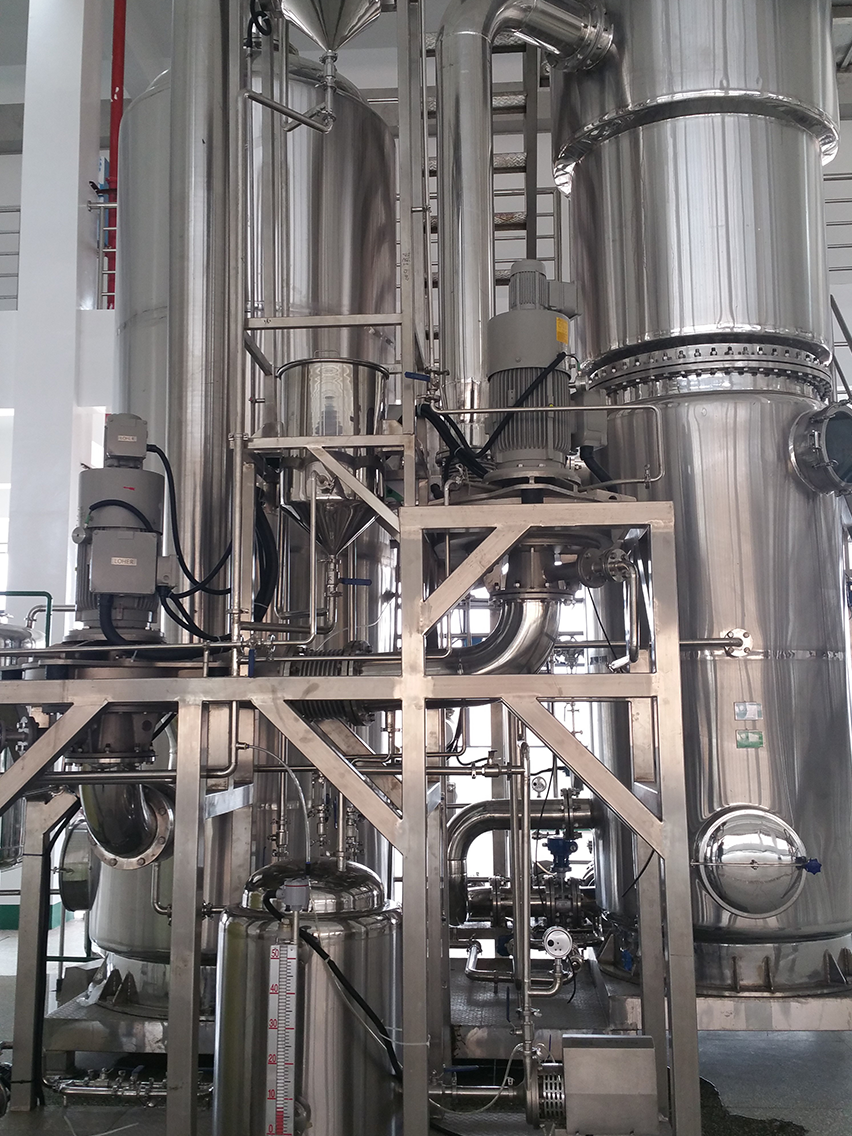
Evaporators are widely used in industries such as wastewater treatment, chemical processing, pharmaceuticals, food production, and mineral recovery. Their performance directly affects production efficiency, energy consumption, and product quality.
During long-term operation, however, scale gradually accumulates on the heat transfer surfaces. This problem is particularly severe in wastewater evaporation systems, where high concentrations of dissolved salts continuously precipitate as the solution becomes more concentrated. Excessive scaling significantly reduces heat transfer efficiency, increases steam and electricity consumption, lowers evaporation capacity, and may eventually cause tube blockage, equipment shutdown, or even damage to the evaporator.
Regular cleaning and proper descaling are therefore essential for maintaining stable operation, maximizing energy efficiency, and extending equipment service life.
Why does Scale Form?
To effectively remove scale, it is first necessary to understand how it forms.
During evaporation, water continuously vaporizes while dissolved salts and impurities become increasingly concentrated. Once their solubility limit is exceeded, crystals begin to nucleate and grow on the heat transfer surfaces, gradually forming hard scale deposits.
The composition of the scale depends on the characteristics of the feed solution. Common scale-forming substances include:
• Calcium carbonate (CaCO₃)
• Calcium sulfate (CaSO₄)
• Magnesium hydroxide (Mg(OH)₂)
• Silica and silicate compounds
• Various metal oxides and mixed inorganic salts
As the scale layer becomes thicker, thermal resistance increases significantly, resulting in lower heat transfer efficiency, higher operating temperatures, greater energy consumption, and more frequent maintenance requirements.
Common Cleaning and Descaling Methods
Based on years of engineering experience, the following cleaning methods are commonly used for industrial evaporators.
1. Water Flushing
Water flushing is the simplest cleaning method. Large quantities of clean water are circulated through the evaporator to dissolve and remove water-soluble deposits.
This method is suitable for relatively soft or highly soluble salts, including:
• Sodium sulfate
• Sodium carbonate
• Potassium salts
• Other readily soluble inorganic salts
Although economical and easy to perform, water flushing is generally ineffective for hard mineral scales such as calcium sulfate or silica.
2. Chemical Cleaning
Chemical cleaning is the most widely used and effective method for removing stubborn scale deposits. Appropriate cleaning chemicals are selected according to the composition of the scale.
Typical chemical cleaning methods include:
– Acid Cleaning
Mineral or organic acids, such as hydrochloric acid, sulfuric acid, or citric acid, dissolve carbonate and other acid-soluble deposits.
– Alkaline Cleaning
Alkaline solutions are used to remove grease, organic contaminants, and certain insoluble compounds before subsequent acid cleaning.
– Chelating Agent Cleaning
Chelating agents such as EDTA combine with calcium, magnesium, and other metal ions to dissolve hard scale without excessively attacking the equipment surface.
When properly designed and controlled, chemical cleaning can restore heat transfer performance quickly while minimizing equipment downtime.
3. Mechanical Descaling
Mechanical cleaning physically removes scale from heat transfer surfaces using methods such as:
• Manual scraping
• Mechanical brushing
• Rotary tube cleaning
• High-pressure water jetting
Mechanical descaling is particularly suitable for thick, hard deposits that cannot be completely removed by chemical cleaning alone. In practice, it is often combined with chemical cleaning to achieve the best cleaning results.
Conclusion
Effective cleaning and descaling are essential for maintaining the long-term performance of industrial evaporators. Regular maintenance not only restores heat transfer efficiency and reduces energy consumption but also minimizes unplanned shutdowns and extends equipment service life.
Whether using water flushing, chemical cleaning, mechanical descaling, or a combination of these methods, selecting the appropriate cleaning strategy based on the actual scaling conditions is the key to achieving the best operating performance.
With extensive experience in industrial evaporation and crystallization systems, we provide customized cleaning recommendations and technical support to help customers maximize equipment efficiency and ensure reliable long-term operation.
Contact US
Please feel free to reach out for proposals