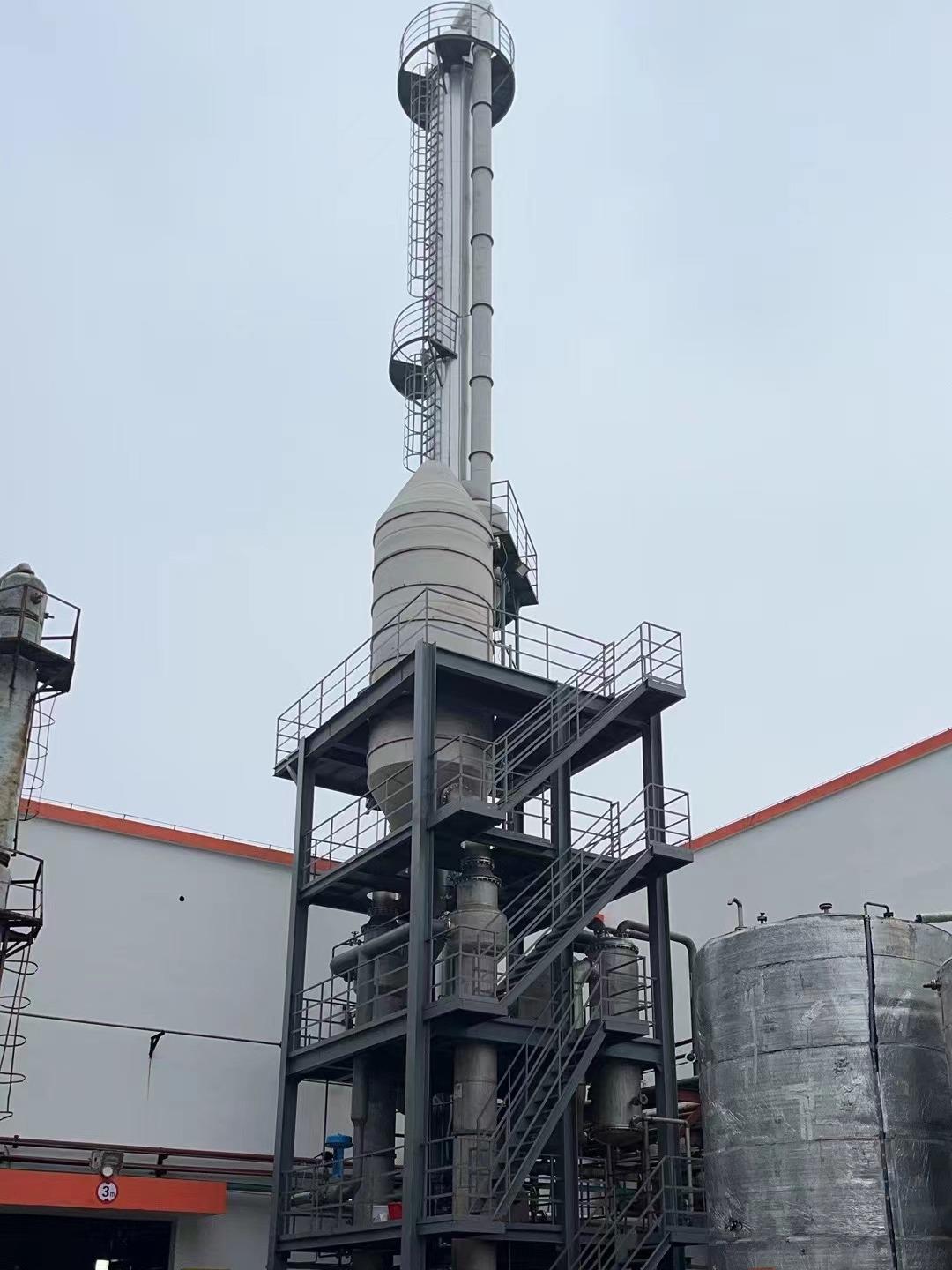
What is MVR (Mechanical Vapor Recompression)?
MVR (Mechanical Vapor Recompression) is an advanced, energy-efficient evaporation technology that recovers and reuses the latent heat of secondary vapor generated during the evaporation process.
In a conventional evaporation system, the latent heat contained in the generated vapor is usually discharged through a condenser, resulting in significant energy loss. The MVR technology overcomes this limitation by mechanically recompressing and recycling the vapor, greatly improving energy utilization efficiency.
In an MVR evaporator system, the secondary vapor produced during evaporation is collected and compressed by a mechanical vapor compressor. The compression process increases the vapor pressure, temperature, and enthalpy (thermal energy content). The high-temperature recompressed vapor is then returned to the heating chamber of the evaporator, where it acts as the primary heating medium for continuous evaporation of the feed solution.
By continuously recycling the vapor’s latent heat, MVR evaporation systems significantly reduce or even eliminate the requirement for fresh steam, resulting in:
• Lower energy consumption
• Reduced operating costs
• Improved environmental performance
• Compact equipment design
• Stable and continuous operation
MVR evaporation technology is therefore widely recognized as one of the most efficient solutions for modern evaporation and crystallization applications.
Main Components of an MVR Evaporator System
• MVR Vapor Compressor
The core component of the MVR system. It mechanically compresses the secondary vapor to increase its pressure, temperature, and enthalpy, enabling the vapor to be reused as the heating source for evaporation.
• Heat Exchanger (Heating Chamber)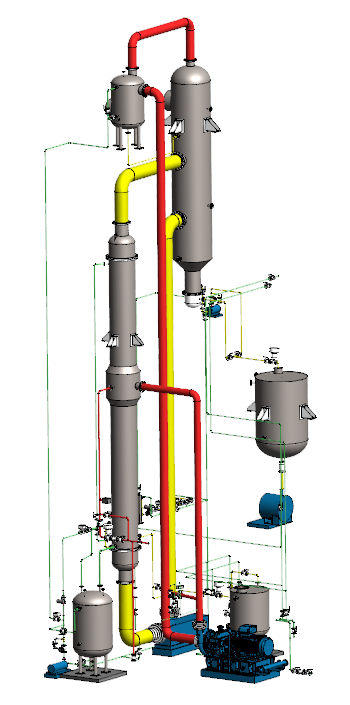
Transfers thermal energy from the compressed vapor to the feed solution, allowing continuous evaporation to occur.
• Vapor–Liquid Separator
Separates the vapor phase and liquid phase after evaporation, ensuring efficient separation and stable system operation.
• Secondary Vapor Separator (Droplet Separator)
Removes entrained liquid droplets from the secondary vapor, improving vapor quality and protecting the MVR compressor from liquid carryover.
• Thickener/Crystallization Unit
In evaporation crystallization applications, the thickener increases the concentration of dissolved solids. By controlling concentration and temperature, supersaturation is achieved, promoting crystal nucleation and growth.
• Condensate Tank
Collects condensed water (distillate) generated after heat exchange and provides a stable outlet for condensate recovery or reuse.
• Centrifuge
Separates solid crystals from the mother liquor to obtain the final crystalline product.
• Mother Liquor Tank
Stores the residual liquid phase after solid–liquid separation and allows further circulation or treatment.
• Circulation Pumps and Process Pumps
Maintain continuous circulation of the process fluid and ensure stable heat and mass transfer throughout the system.
• Automation and Control System
Provides centralized monitoring, automatic operation, process adjustment, and system optimization to ensure safe and efficient operation.
Applications of MVR Evaporation and Crystallization Systems
The extensive application of MVR evaporation technology is mainly driven by its outstanding energy-saving performance and excellent suitability for large-scale continuous evaporation and crystallization processes.
By recovering and reusing the latent heat of secondary vapor through mechanical compression, MVR systems significantly reduce steam consumption and operating costs while providing reliable performance for high-value process applications.
Typical Application Industries
• Fine Chemicals and Pharmaceuticals
Concentration, solvent recovery, and crystallization of chemical and pharmaceutical solutions.
• Petrochemical Industry
Treatment and concentration of process wastewater, recovery of valuable components, and resource utilization.
• Solid and Hazardous Waste Treatment
Reduction of wastewater volume and recovery of reusable materials from high-salt or complex waste streams.
• RO Concentrate Treatment
Concentration and further treatment of reverse osmosis reject streams for zero liquid discharge (ZLD) applications.
• Power Industry
Treatment of flue gas desulfurization (FGD) wastewater and high-salt wastewater generated from power plants.
• Food and Beverage Industry
Concentration of food ingredients, dairy products, extracts, and other heat-sensitive materials.
• New Energy and Lithium Battery Industry
Treatment of lithium-containing solutions, recovery of valuable salts, and production of battery-grade materials.
• Electronics and New Materials Industry
High-purity material production and wastewater treatment for advanced manufacturing processes.
• Environmental Engineering
Industrial wastewater evaporation, resource recovery, and zero liquid discharge solutions.
Advantages of MVR Evaporation Technology
• High Energy Efficiency
Reuses vapor latent heat and minimizes external steam consumption
• Low Operating Cost
Reduces energy requirements compared with traditional evaporation systems
• Environmentally Friendly
Supports energy conservation and zero liquid discharge solutions
• Flexible Application
Suitable for evaporation, concentration, and crystallization processes
• Automatic Operation
Enables stable, continuous, and intelligent process control
• Compact Design
Requires less installation space compared with conventional multi-effect evaporation systems
Contact Us
Feel free to contact us for customized solutions and competitive offers in evaporation and crystallization systems.