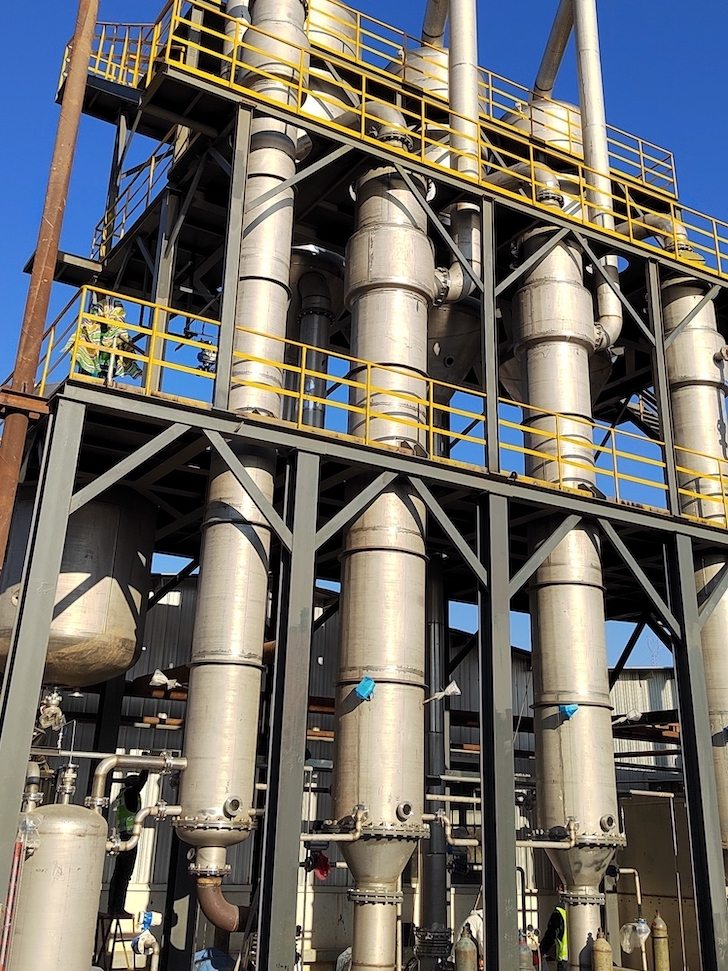
Abstract
The performance, reliability, and service life of industrial evaporator systems are highly dependent on the selection of appropriate construction materials. Different process media, operating temperatures, concentrations, and corrosion conditions require different material solutions to ensure safe and efficient operation.
This article discusses the key factors influencing material selection for evaporator systems, including corrosion resistance, temperature resistance, mechanical strength, process compatibility, and cost-effectiveness. Commonly used materials for industrial evaporators include titanium, duplex stainless steel 2205, stainless steel SS316L, SS304, and other specialized alloys.
By selecting the most suitable material according to the characteristics of the process solution, industries can achieve improved equipment durability, reduced maintenance requirements, and optimized operating costs.
Introduction
Evaporators are widely used in industries such as chemical processing, wastewater treatment, food and beverage, pharmaceuticals, and new energy manufacturing for solution concentration, solvent recovery, salt recovery, and zero liquid discharge (ZLD) applications.
During evaporation, equipment materials are exposed to concentrated solutions, elevated temperatures, and potentially corrosive environments. Therefore, material selection plays a critical role in determining the overall performance, operational stability, and service life of the evaporator system.
The ideal construction material should provide:
• Excellent corrosion resistance against process media
• Sufficient mechanical strength under operating conditions
• Good thermal performance for efficient heat transfer
• Long-term stability at elevated temperatures
• Reasonable investment and maintenance costs
Analysis of Commonly Used Materials for Evaporators
1. Titanium
Titanium is widely recognized as one of the most corrosion-resistant metals used in industrial equipment. It demonstrates excellent resistance to chloride corrosion, seawater corrosion, and many acidic or alkaline environments.
The main advantages of titanium include:
• Outstanding corrosion resistance
• High strength-to-weight ratio
• Good resistance to chloride-containing solutions
• Excellent service performance in harsh chemical environments
Titanium is particularly recommended for evaporator systems handling high chloride concentration solutions, such as calcium chloride, sodium chloride, ammonium chloride, and other chloride-rich wastewater streams.
2. Duplex Stainless Steel 2205
Duplex stainless steel 2205 is a ferritic-austenitic stainless steel containing approximately:
• 21% chromium
• 2.5% molybdenum
• 4.5% nickel
• Nitrogen alloying elements
Due to its dual-phase structure, duplex stainless steel 2205 provides:
• Higher mechanical strength than conventional austenitic stainless steels
• Excellent resistance to stress corrosion cracking
• Good resistance to pitting and crevice corrosion
• Better chloride resistance than SS304 and SS316L in many applications
It is commonly used for evaporators handling sulfate-containing solutions and moderately corrosive chemical media.
3. Stainless Steel SS316L
SS316L is one of the most commonly used materials in chemical processing equipment due to its excellent corrosion resistance.
Compared with SS304, SS316L contains approximately 2–3% molybdenum (Mo), which significantly improves resistance to:
• Pitting corrosion
• Crevice corrosion
• Chloride-containing environments
• High-temperature chemical attack
The advantages of SS316L include:
• Good corrosion resistance
• Excellent weldability
• Good mechanical properties
• Wide availability and cost effectiveness
SS316L is suitable for many chemical, pharmaceutical, food, and wastewater evaporation applications where corrosion conditions are moderate.
4. Stainless Steel SS304
SS304 is one of the most widely used stainless steels due to its good balance of performance and cost. It is commonly applied in:
• Food processing industries
• Pharmaceutical equipment
• General industrial applications
• Low-corrosion evaporation processes
However, SS304 is not recommended for high chloride or highly corrosive environments.
Material Selection Guidelines for Evaporator Applications
Material selection should always be based on the actual composition, concentration, temperature, and operating conditions of the process solution.
• Titanium Recommended Applications
Titanium is recommended for solutions containing:
• Calcium chloride
• Sodium chloride
• Ammonium chloride
• Magnesium chloride
• Potassium chloride
• Chloride ion concentration above approximately 150 ppm
Titanium provides reliable performance in high-chloride environments where stainless steels may experience rapid corrosion.
• Duplex Stainless Steel 2205 Recommended Applications
Duplex stainless steel 2205 is recommended for sulfate-containing solutions, including:
• Manganese sulfate
• Ammonium sulfate
• Nickel sulfate
• Other sulfate-based chemical solutions
It provides an excellent balance between corrosion resistance, mechanical strength, and cost.
• SS316L Recommended Applications
SS316L can be selected for applications involving:
• Manganese sulfate
• Ammonium sulfate
• Sodium hypophosphite
• Magnesium sulfate
• Nickel sulfate
• Sodium nitrate
• Zinc sulfate
• Sodium bisulfite
• Landfill leachate treatment (depending on composition)
• SS304 Recommended Applications
SS304 is suitable for relatively mild applications, including:
• Sodium carbonate solutions
• Sodium sulfate solutions
• Sodium bisulfite solutions
• Food processing applications
• Traditional Chinese medicine extraction
• Milk concentration
• Starch processing
• Monosodium glutamate (MSG) production
Conclusion
Selecting the appropriate material for an industrial evaporator system is a critical engineering decision that directly affects equipment reliability, energy efficiency, maintenance requirements, and total operating cost.
There is no universal material suitable for all evaporation applications. The optimal selection requires comprehensive evaluation of:
• Chemical composition of the feed solution
• Corrosion characteristics
• Operating temperature and pressure
• Required service life
• Investment considerations
Through professional material evaluation and process analysis, the evaporator system can achieve stable operation and maximum economic value.
For assistance with evaporator material selection or customized evaporation solutions, please feel free to contact our technical team.
Contract Us
Please feel free to reach out!