Selecting the right construction material is one of the most critical factors in ensuring the reliability, service life, and operating cost of an evaporator. The optimal material depends largely on the composition of the wastewater, especially in industrial wastewater treatment, where feed streams often contain complex mixtures of salts and corrosive substances.
Based on our engineering experience, salt-containing wastewater can generally be divided into two categories:
• Chloride-containing wastewater: Sodium chloride, ammonium chloride, magnesium chloride, calcium chloride, etc.
• Non-chloride wastewater: Sodium sulfate, ammonium sulfate, sodium carbonate, nitrates, and other sulfate- or carbonate-based solutions.
Material Selection for Chloride Wastewater
Chloride ions are highly corrosive and can cause pitting corrosion and stress corrosion cracking in conventional stainless steels. Therefore, material selection is particularly important.
Recommended materials (highest corrosion resistance):
• Titanium alloys (TA2, TA9, TA10)
• Duplex stainless steel
• Carbon steel (for suitable operating conditions)
• Stainless steel (SS304/SS316L)
Cost-effective selection:
• Carbon steel
• Titanium alloys
• Duplex stainless steel
• Stainless steel (SS304/SS316L)
The final material selection should always be based on chloride concentration, operating temperature, pH, and process conditions.
Material Selection for Non-Chloride Wastewater
For wastewater containing sulfate, carbonate, nitrate, and similar salts, corrosion is generally less severe, allowing a wider range of construction materials.
Recommended materials (highest corrosion resistance):
• SS316L
• SS304
• Carbon steel
Most economical options:
• SS304 or SS316L
• Carbon steel
The most suitable material depends on the specific composition, concentration, temperature, and operating environment.
Optimized Material Configuration
Rather than manufacturing the entire evaporator from a single material, we optimize the material selection for each component to maximize equipment life while minimizing investment costs.
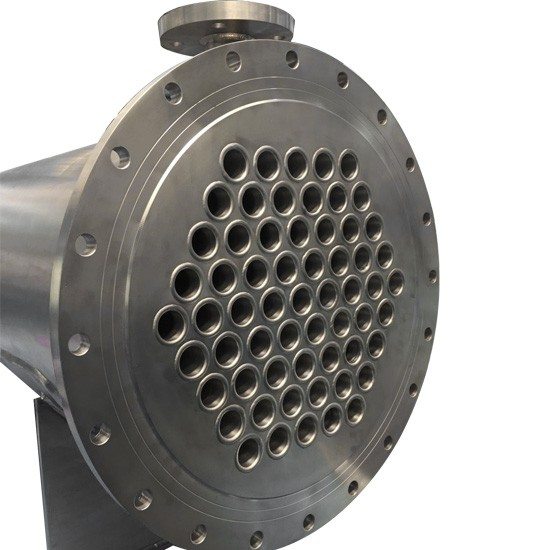
• Wetted parts: such as the heat exchanger tubes, separator, piping, and pumps that are in direct contact with the process liquid, are manufactured from corrosion-resistant materials selected according to the process conditions.
• Non-wetted parts, including the equipment frame and external structures, are typically fabricated from carbon steel or other economical materials.
This optimized design provides the best balance between corrosion resistance, equipment reliability, and overall project cost.
Our Engineering Approach
Every wastewater stream has unique characteristics. Our engineers evaluate key process parameters, including salt composition, chloride concentration, pH, operating temperature, pressure, and scaling tendency, to recommend the most suitable material solution for your evaporator system.
Whether you require carbon steel, stainless steel, duplex stainless steel, titanium, or a combination of materials, we provide customized designs that ensure long-term performance, lower maintenance costs, and maximum return on investment.
Please feel free to contact us for an optimized solution.Contact US