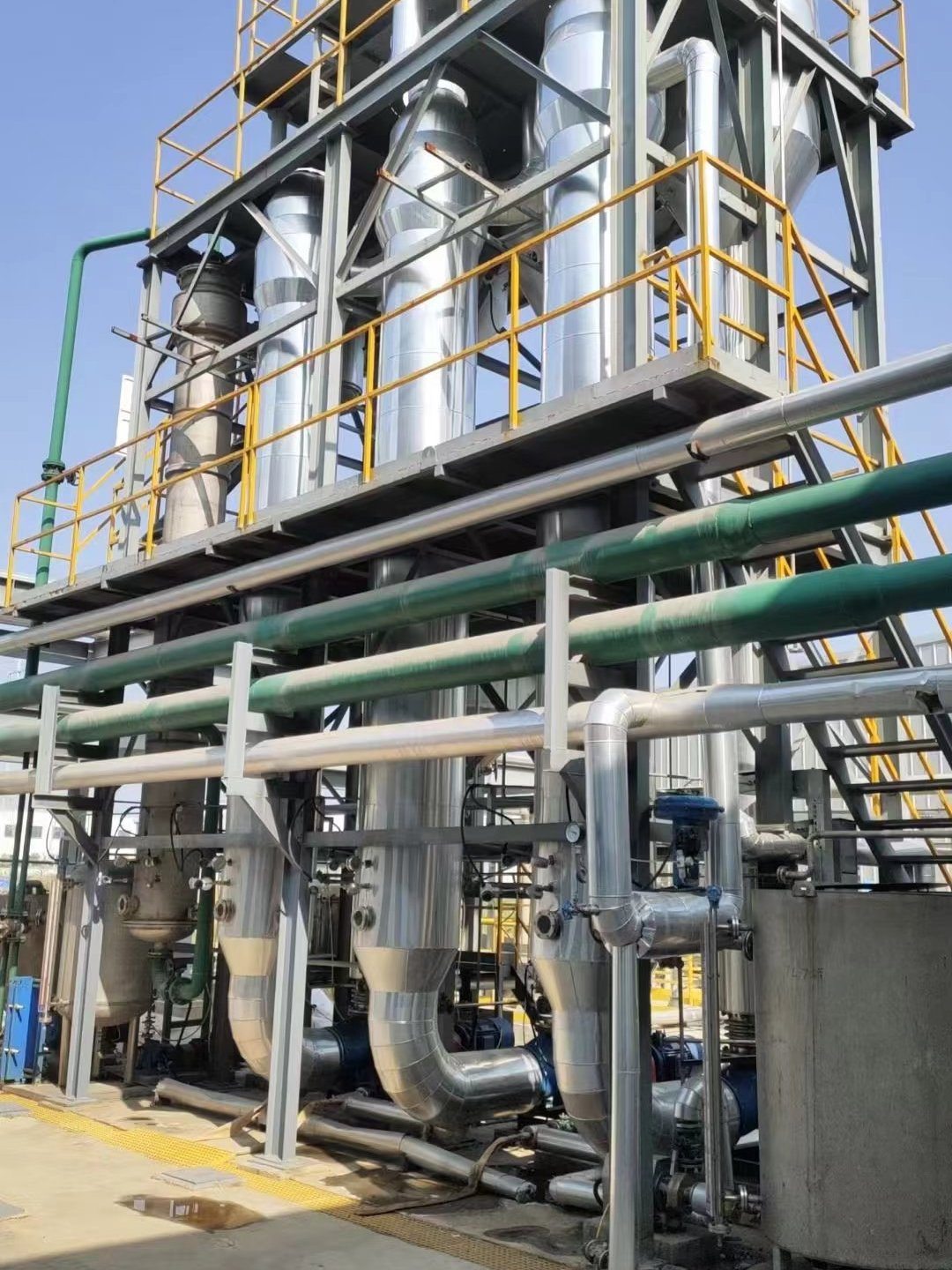
For evaporators and crystallizers used in seawater treatment or other high-chloride applications, titanium is generally the preferred construction material due to its outstanding resistance to chloride-induced corrosion. Selecting the appropriate titanium grade is essential for ensuring long-term equipment reliability, minimizing maintenance requirements, and extending equipment service life.
The following comparison of commercially pure titanium (Grade 2, TA2) and titanium alloys provides a practical reference for selecting suitable construction materials for seawater evaporators and crystallizers.
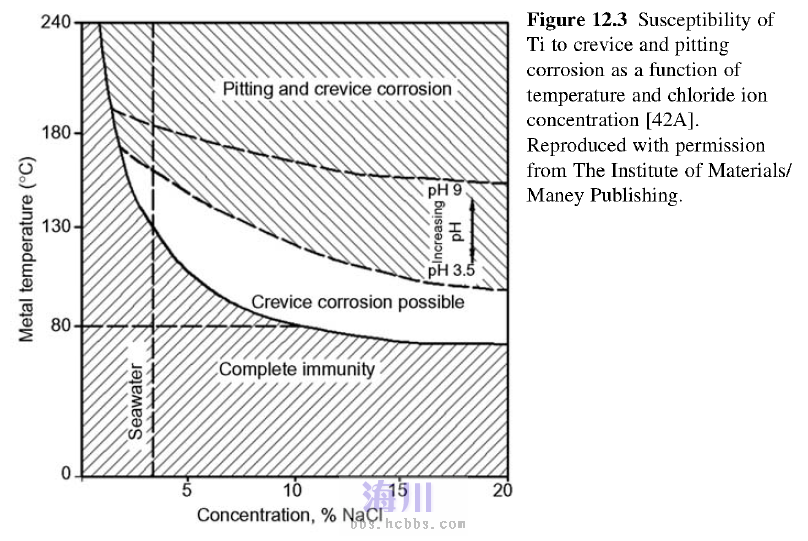
Natural seawater typically has a salinity of less than 5 wt.%. Based on extensive laboratory research and long-term industrial applications, commercially pure titanium (Grade 2, TA2) can be safely used in seawater at operating temperatures below 120°C, where it provides excellent resistance to general corrosion.
However, the corrosion behavior of titanium is affected by operating temperature:
• Below 120°C: Pure titanium exhibits excellent long-term corrosion resistance.
• Above 120°C: The risk of crevice corrosion gradually increases.
• At higher temperatures: Pitting corrosion may occur, especially in stagnant or low-oxygen environments.
Therefore, both the chloride concentration and the operating temperature should be carefully evaluated when selecting construction materials for seawater evaporation and crystallization systems.
The corrosion resistance of titanium in sodium chloride solutions also depends on the chloride ion concentration, solution pH, and operating temperature. The figure below illustrates the susceptibility of titanium to crevice and pitting corrosion under different operating conditions.
For more demanding applications, titanium alloys offer enhanced corrosion resistance. Grade 7 (TA9, Ti-0.2Pd) and Grade 12 (TA10, Ti-Ni-Mo) exhibit superior resistance to localized corrosion and are suitable for pressurized seawater service at temperatures of up to 260°C. These alloys are widely used in high-temperature evaporators, crystallizers, desalination systems, and other severe chloride-service applications where commercially pure titanium may not provide sufficient protection.
Contact Us
Reach out to an optimized proposal