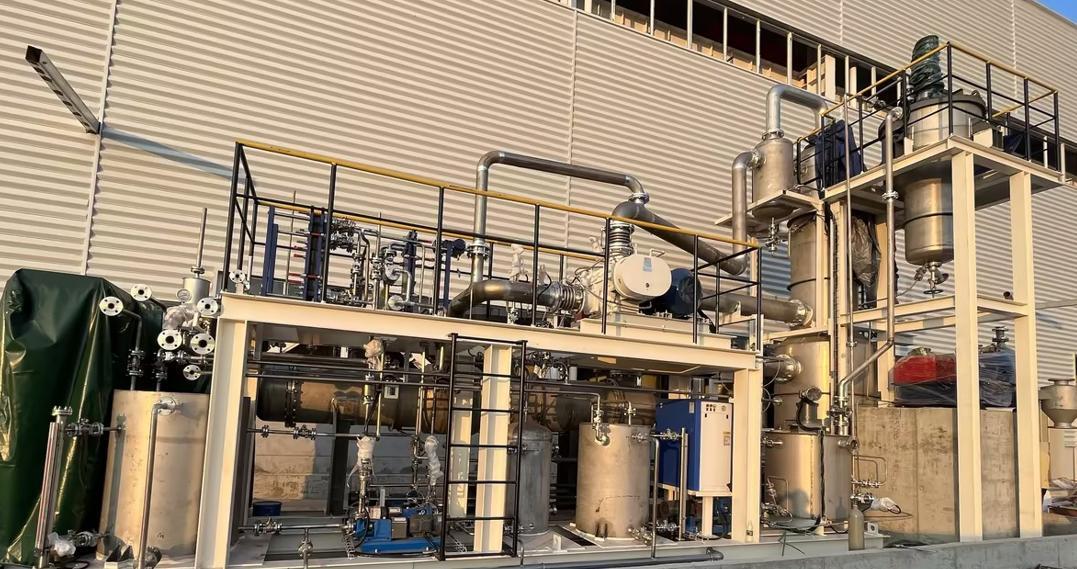
Mechanical Vapor Recompression (MVR) technology is widely recognized as one of the most energy-efficient evaporation technologies available today. By recovering and reusing the latent heat of secondary vapor, MVR systems dramatically reduce fresh steam consumption and operating costs compared with conventional evaporation systems.
However, the energy efficiency of an MVR evaporator depends not only on its operating principle but also on proper system design, equipment selection, process optimization, and operational management. Through careful engineering and optimization, additional energy savings can be achieved while improving system reliability and extending equipment service life.
The following strategies are commonly employed to maximize the performance of MVR evaporation systems.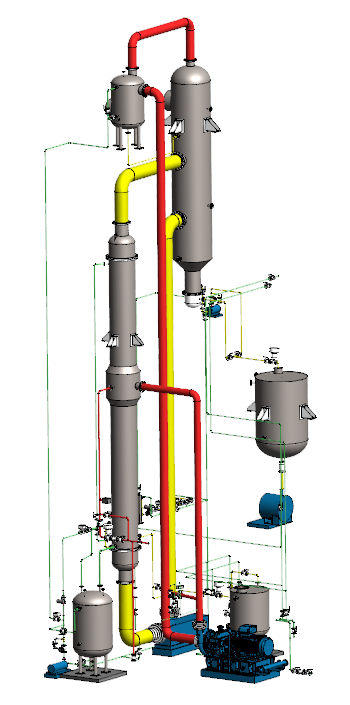
Optimize Feed Pretreatment
Proper pretreatment improves heat transfer efficiency, reduces fouling, and minimizes compressor load.
• Reduce Suspended Solids
Remove suspended solids through filtration, sedimentation, or centrifugation before evaporation. Cleaner feed reduces scaling and fouling inside heat exchangers, resulting in higher heat transfer efficiency and longer operating cycles between cleanings.
• Optimize Feed Chemistry
Adjust pH and, where appropriate, apply antiscalants or corrosion inhibitors to minimize scale formation and corrosion. Proper chemical conditioning helps maintain stable long-term performance.
• Recover Heat for Feed Preheating
Use condensate or hot concentrate to preheat the incoming feed through heat exchangers. Recovering waste heat reduces the amount of energy required for evaporation.
Improve Compressor Efficiency
Since the compressor is the primary energy consumer in an MVR system, maximizing its efficiency is critical.
• Select the Appropriate Compressor
Choose centrifugal, roots, or screw compressors according to evaporation capacity, compression ratio, vapor properties, and operating conditions to ensure optimum efficiency.
• Install Variable Frequency Drives (VFD)
Variable frequency drives automatically adjust compressor speed to match evaporation demand, reducing unnecessary power consumption during partial-load operation.
• Perform Preventive Maintenance
Regularly inspect impellers, bearings, seals, and lubrication systems to maintain peak mechanical efficiency and prevent unexpected failures.
Optimize Heat Exchanger Performance
Efficient heat transfer directly reduces compressor power requirements.
• Improve Liquid Distribution
Design effective feed distributors to ensure uniform liquid distribution over the heat transfer surfaces, maximizing evaporation efficiency.
• Control Fouling
Establish routine chemical or mechanical cleaning programs to maintain high heat transfer coefficients and minimize pressure losses.
• Optimize Heat Transfer Area
Properly size evaporators and condensers to provide sufficient heat transfer without unnecessary equipment oversizing or excessive pressure drop.
Maximize Heat Recovery
Recovering low-grade heat significantly improves overall system efficiency.
• Recover Waste Heat
Reuse heat from condensate, concentrate, and exhaust streams whenever possible. Heat pumps or additional heat exchangers can further recover low-temperature thermal energy.
• Combine MVR with Multiple-Effect Evaporation
For large-capacity evaporation plants, hybrid MVR-MEE systems can reduce compressor power requirements while maintaining excellent steam economy.
• Improve Thermal Insulation
Properly insulate evaporators, piping, valves, and condensate systems to minimize heat loss throughout the plant.
Optimize Operating Conditions
Stable operating conditions allow the MVR system to operate near its highest efficiency.
• Optimize Operating Temperature and Pressure
Operate at the lowest practical evaporation temperature and pressure while satisfying process requirements. Lower compression temperature differences generally reduce compressor power consumption.
• Optimize Compression Ratio
Avoid excessive compression ratios. Proper system design should minimize the temperature lift required from the compressor while maintaining adequate heat transfer.
• Maintain Stable Operating Load
Continuous operation under stable load conditions improves compressor efficiency and reduces unnecessary energy consumption caused by frequent start-stop cycles.
Implement Intelligent Control and Monitoring
Advanced automation enables continuous optimization of system performance.
• Real-Time Process Monitoring
Monitor key operating parameters, including temperature, pressure, vacuum, liquid level, flow rate, and compressor power consumption, to ensure optimal operating conditions.
• Intelligent Process Optimization
Advanced control systems, digital twins, and machine-learning algorithms can continuously optimize compressor operation, evaporation temperature, and system load for maximum energy efficiency.
• Conduct Energy Performance Audits
Regularly analyze operating data to identify energy losses, evaluate equipment performance, and implement continuous improvements.
Improve Overall System Design
Additional engineering improvements can further enhance energy efficiency and operational reliability.
• High-Efficiency Vapor-Liquid Separation
Efficient separators reduce liquid entrainment into the compressor, improving compressor performance and protecting rotating equipment.
• Optimize Piping Design
Minimize pressure losses by using properly sized piping, smooth flow paths, and fewer unnecessary fittings.
• Design for Reliability
Incorporate redundancy for critical equipment such as pumps and compressors where appropriate to maintain stable operation during maintenance or unexpected equipment failures.
Conclusion
The energy efficiency of an MVR evaporator depends on the optimization of the entire evaporation system rather than on the vapor compressor alone. Feed pretreatment, compressor performance, heat transfer efficiency, waste heat recovery, operating conditions, intelligent process control, and overall system design all play essential roles in minimizing energy consumption.
By integrating these optimization strategies into both the design and operation of an MVR system, plant operators can achieve lower operating costs, improved equipment reliability, extended service life, and greater long-term energy efficiency. A well-designed and properly operated MVR evaporator not only delivers significant economic benefits but also contributes to reduced carbon emissions and more sustainable industrial production.
Get In Touch With US
Enchem is here to listen to your needs and provide sustainable solutions. Contact us to discover more.