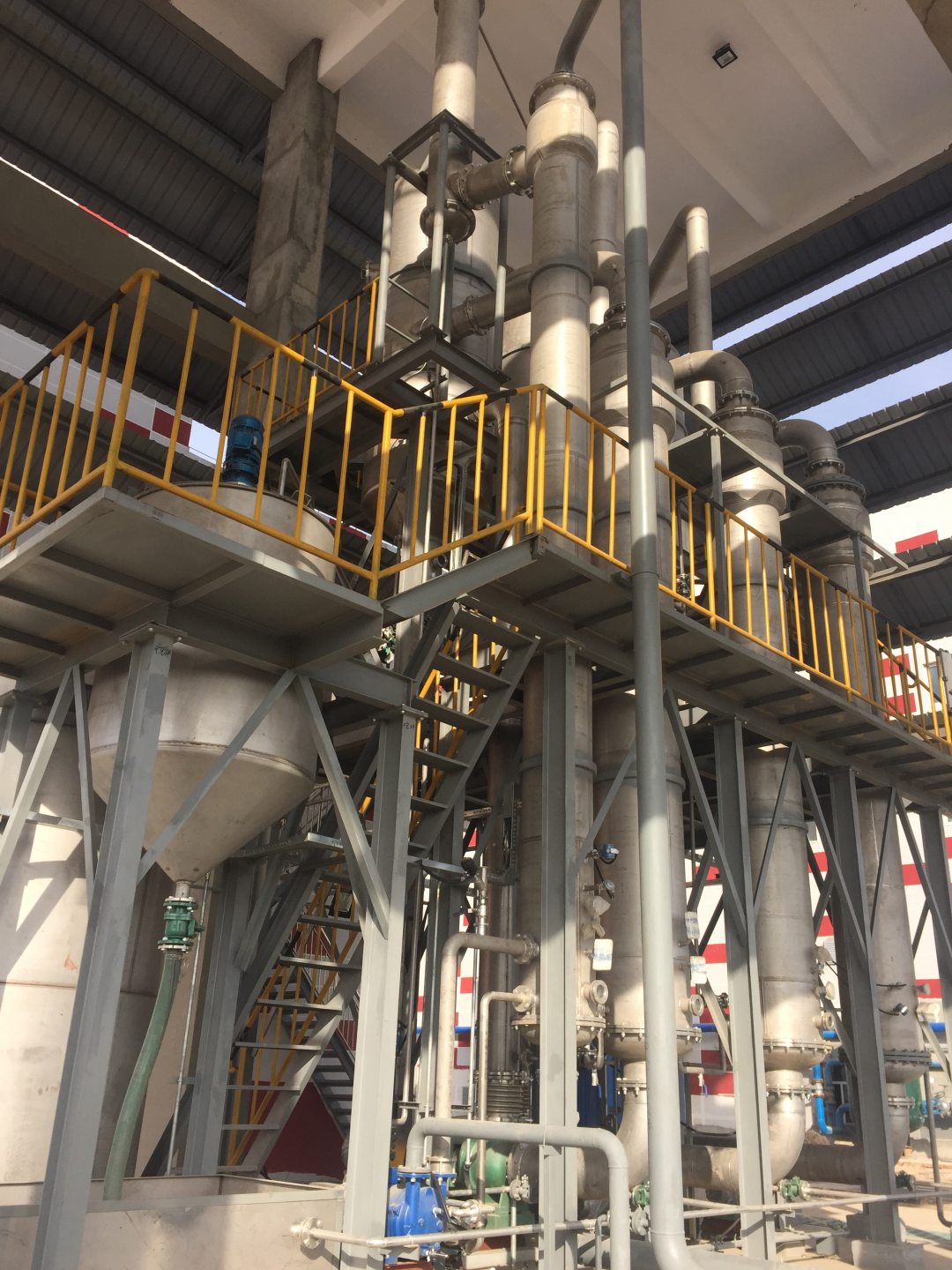
Introduction
Clogging and scaling are among the most common operational challenges in wastewater evaporation systems. If not properly controlled, they can reduce heat transfer efficiency, increase energy consumption, shorten operating cycles, and even lead to unplanned shutdowns.
In most wastewater evaporators, clogging and scaling are primarily caused by two factors:
• Crystallization of dissolved salts as the wastewater becomes increasingly concentrated during evaporation.
• Deposition of hardness minerals, mainly calcium and magnesium compounds, on heat transfer surfaces.
Because these two mechanisms are different, effective prevention requires different engineering solutions.
1. Select the Appropriate Evaporator Type
Choosing the correct evaporator is the most important step in preventing clogging and scaling.
For wastewater that readily crystallizes during concentration, falling film evaporators are generally not recommended. These systems rely on a thin liquid film flowing over the heat transfer surface, making them susceptible to blockage once crystals begin to form.
Instead, forced circulation evaporators or scraped surface (scraper film) evaporators are more suitable for high-salinity wastewater and crystallizing applications.
Among these options, forced circulation evaporators are often the preferred choice because they offer:
• High liquid circulation velocity, reducing crystal deposition on heat transfer surfaces.
• Larger heat transfer area and stable evaporation performance.
• Excellent handling of high-viscosity and high-solid-content liquids.
• Simple operation and lower maintenance requirements.
2. Optimize Pipeline Design
Proper pipeline design plays a critical role in preventing salt accumulation.
The piping system should be designed to eliminate dead zones where crystals can settle and accumulate. Pipe routing, flow velocity, and equipment layout should allow crystallized salts to remain suspended and be continuously transported to the salt collection chamber or crystallizer for discharge.
A well-designed circulation system significantly reduces the risk of pipeline blockage and improves long-term operational stability.
3. Reduce Calcium and Magnesium Scaling
When scaling is primarily caused by calcium and magnesium salts, additional preventive measures should be considered.
– Soften the Feed Water
Pretreating the wastewater through water softening can significantly reduce the concentration of calcium and magnesium ions, thereby minimizing the formation of hard mineral scale.
– Use a Forced Circulation Evaporator
The high circulation rate inside a forced circulation evaporator helps reduce scale formation by limiting the residence time of crystals on heat transfer surfaces.
– Add Antiscalant Chemicals
Appropriate antiscalants can inhibit crystal nucleation and growth, reducing the adhesion of mineral deposits to the heat transfer tubes. The selection of antiscalants should be based on the wastewater composition and operating conditions.
– Perform Regular Cleaning
Even with proper design and pretreatment, some scale formation is unavoidable during long-term operation. Regular cleaning using water flushing, chemical cleaning, or mechanical descaling helps restore heat transfer efficiency, reduce energy consumption, and extend equipment service life.
Conclusion
Preventing clogging and scaling requires a combination of proper equipment selection, optimized process design, effective pretreatment, and routine maintenance.
For high-salinity and crystallizing wastewater, a forced circulation evaporator is generally the most reliable solution due to its excellent resistance to fouling and stable long-term performance. Combined with proper pipeline design, feedwater softening, antiscalant dosing, and scheduled cleaning, it can significantly improve evaporation efficiency while reducing maintenance costs and operational downtime.
Contact Us
Please feel free to reach out to an optimized offer.