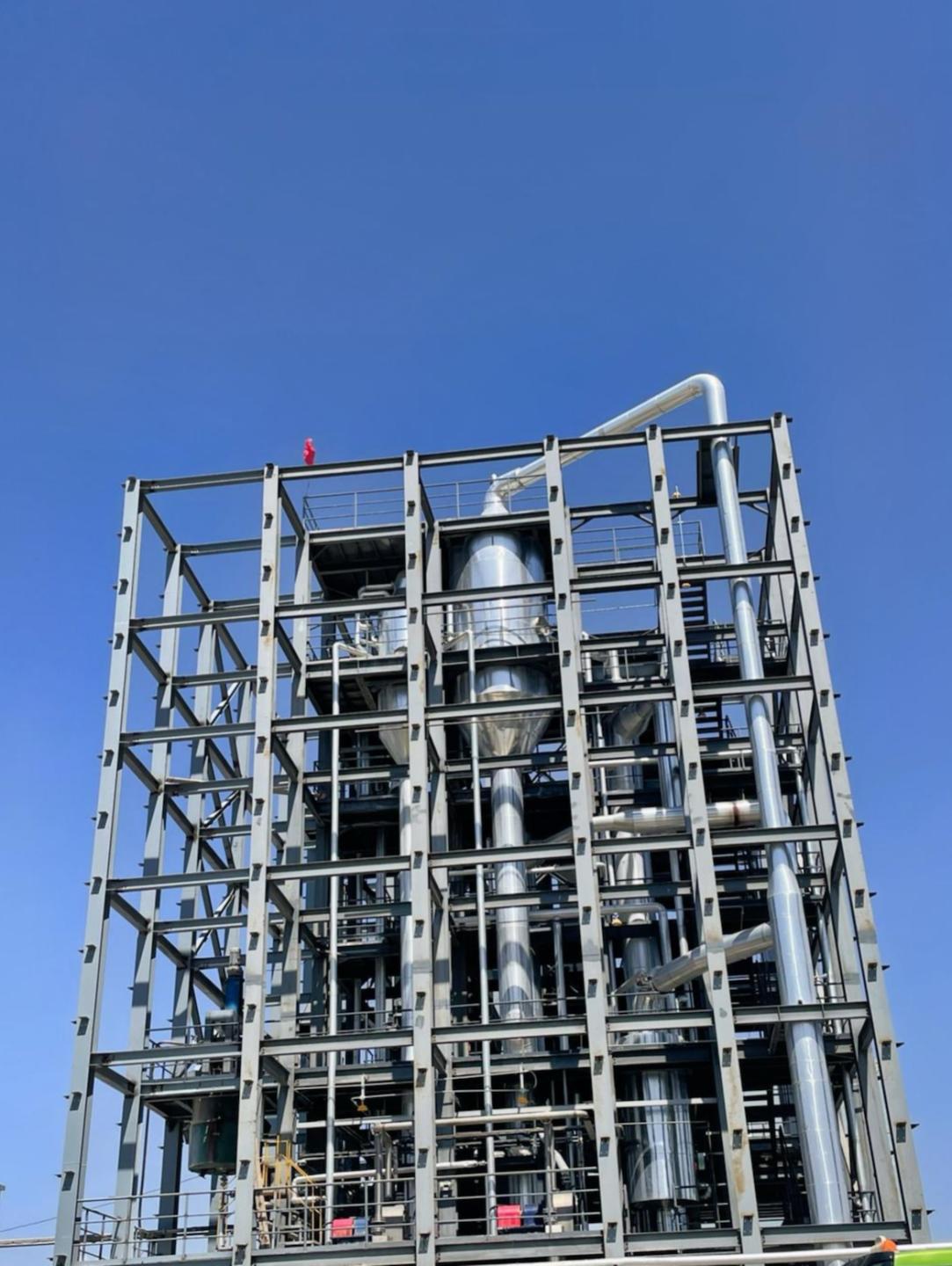
What Is an Evaporator?
An evaporator is a process device that transfers heat to a liquid, causing the solvent, typically water, to evaporate while concentrating the dissolved solids or separating the solvent from the solution. Evaporators are widely used in industrial processes where volume reduction, product concentration, solvent recovery, or wastewater treatment is required.
Typical applications include: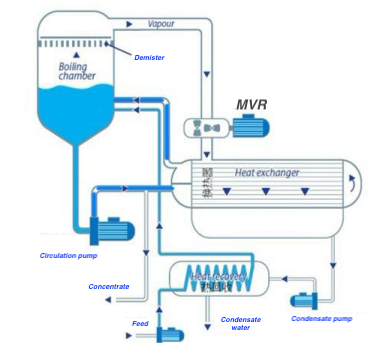
• Chemical processing
• Pharmaceutical manufacturing
• Food and beverage production
• Environmental protection and wastewater treatment
• Battery materials and lithium processing
Beyond achieving efficient concentration and separation, the quality of the recovered condensate is equally important. High-quality condensate can often be reused as process water, reducing freshwater consumption and operating costs while ensuring compliance with increasingly stringent environmental regulations.
Key Measures to Ensure Condensate Quality
Modern evaporator systems incorporate multiple design and control strategies to minimize contamination and ensure consistently high condensate purity.
1. High-Efficiency Demister System
A properly designed three-stage demister, combined with optimized vapor velocity and sufficient vapor-liquid separation height, effectively removes entrained liquid droplets from the vapor stream. This significantly reduces carryover and improves condensate quality.
2. Precise Evaporation Temperature Control
An advanced Heat and Balance System (HABS) maintains precise control of the evaporation temperature throughout the process. By preventing excessive boiling temperatures, the system minimizes the vaporization of high-boiling-point contaminants and volatile impurities, helping maintain clean condensate.
3. Automatic pH Control
An automated acid and alkali dosing system continuously adjusts the feed solution pH based on real-time pH and COD measurements. Maintaining the optimum pH improves process stability and helps prevent undesirable contaminants from entering the condensate.
4. Foam Detection and Automatic Antifoam Dosing
Foam formation is one of the primary causes of condensate contamination. An intelligent foam detection system continuously monitors the evaporator and automatically injects antifoaming agents whenever excessive foam is detected, effectively preventing foam carryover.
5. Integrated Pretreatment and Post-Treatment Systems
Depending on the feed characteristics and required condensate quality, additional treatment units can be incorporated into the process, including:
• Chemical precipitation tanks
• Filtration systems
• Oil-water separators
• Activated carbon filters
• Reverse osmosis (RO) systems
• Ion exchange units
These pretreatment and polishing processes further improve feed quality or enhance condensate purity for reuse.
6. Real-Time Online Quality Monitoring
Online instruments continuously monitor critical condensate quality parameters such as conductivity, pH, COD, TOC, or ammonia concentration. If the condensate quality falls outside the preset limits, the control system automatically diverts the off-spec condensate back to the evaporator or to a dedicated treatment system, ensuring that only qualified condensate is discharged or reused.
Conclusion
Maintaining high condensate quality requires more than efficient evaporation, it depends on a well-integrated combination of equipment design, process control, and intelligent monitoring.
The most suitable condensate protection measures should be selected according to the characteristics of the feed solution, the required water quality standards, and the specific process requirements. By combining efficient vapor-liquid separation, precise temperature control, automated pH regulation, foam management, appropriate pretreatment, and continuous online monitoring, modern evaporator systems can consistently produce high-purity condensate suitable for reuse while meeting strict environmental and operational standards.
Get In Touch With US
Enchem is here to listen to your needs and provide sustainable solutions. Contact us to discover more.