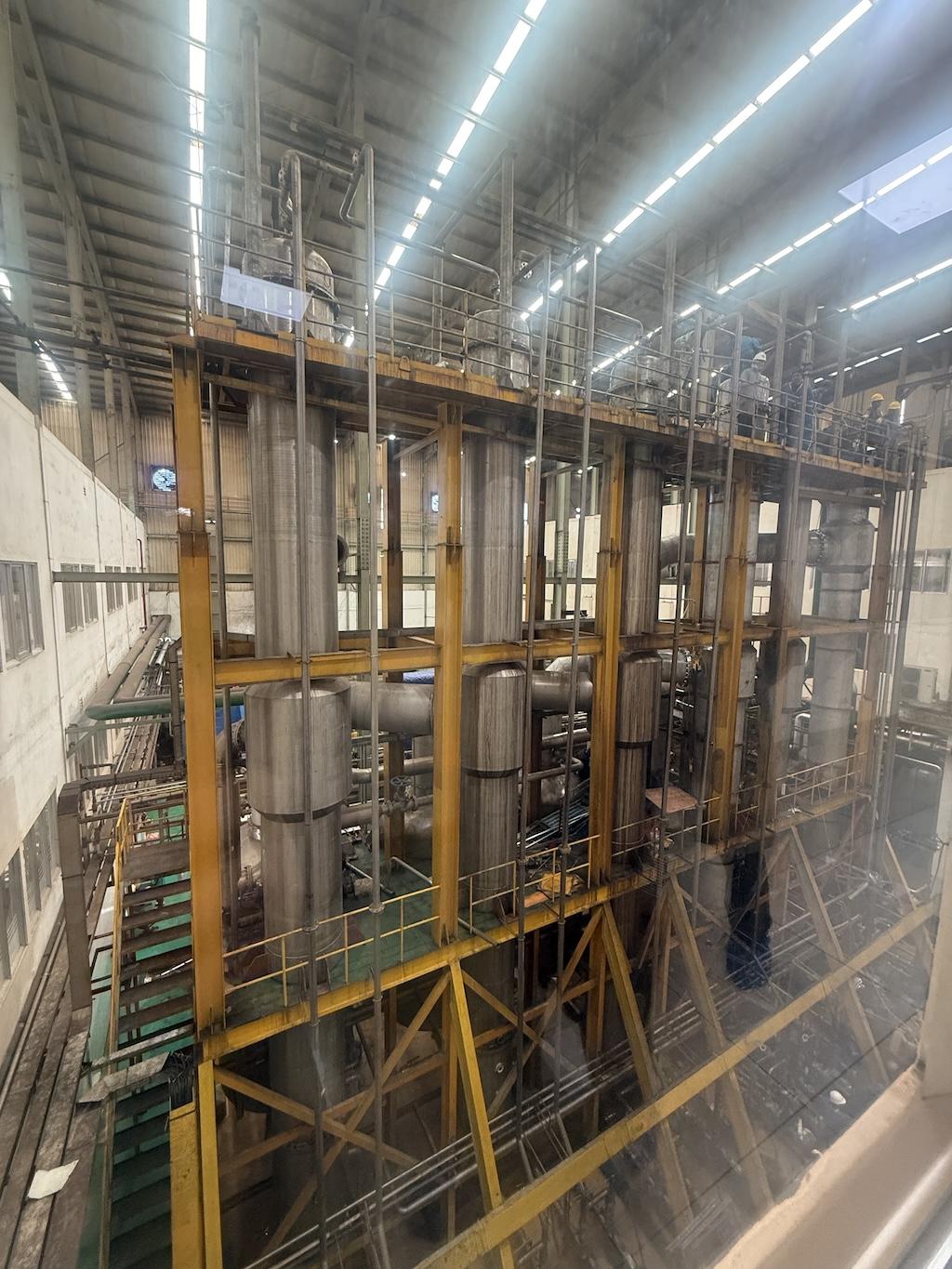
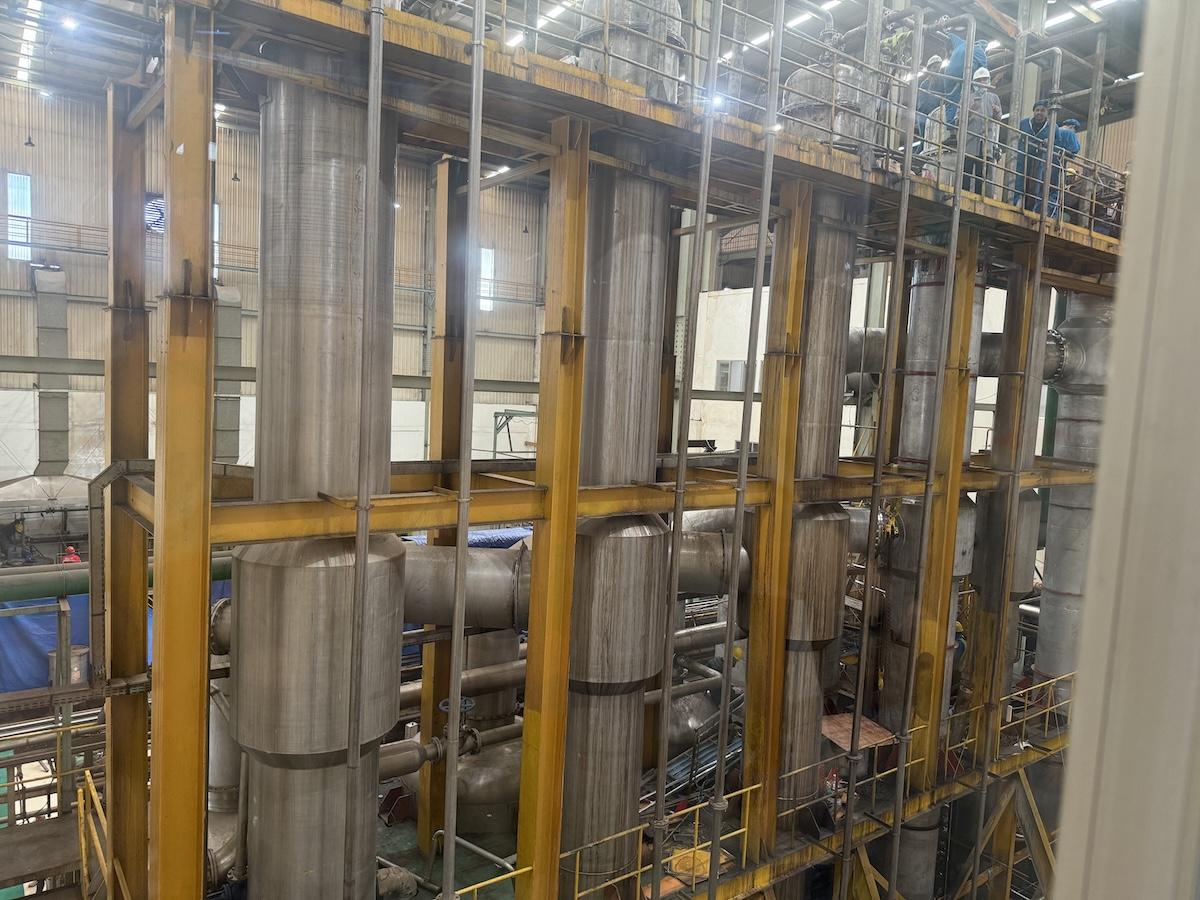
We are proud to announce the successful commissioning of an Instant Coffee Liquor 4-effect evaporator upgrading project in Indonesia. This project represents a significant achievement in enhancing evaporation efficiency, reducing energy consumption, and improving overall system reliability for instant coffee production.
Project Background
The project was designed to upgrade an existing evaporator system with the following objectives:
• Increase processing capacity
• Reduce specific steam consumption
• Improve operational stability under high-concentration conditions
With the growing demand for energy-efficient and high-performance processing systems in the food and beverage industry, this upgrade demonstrates our commitment to delivering practical and innovative engineering solutions, while also contributing to the reduction of carbon emissions and supporting more sustainable production practices.
Commissioning Challenges and Solutions
During the commissioning phase, several key technical challenges were identified and effectively resolved:
1. Vacuum Performance Limitations
Initial testing showed that the system vacuum could only reach -0.07 MPa, below the design requirement of -0.09 MPa.
Through systematic inspection, leakage points at flange connections were identified and rectified, significantly improving system sealing and restoring vacuum performance.
2. Material Distribution Issues
The newly installed spiral distributor in the fourth effect experienced blockage due to the high content of insoluble solids in the coffee extract.
Following detailed analysis, the distribution system was redesigned by reverting to a distribution disc configuration, ensuring stable and uniform material flow.
3. High Solid Content and Fouling Risks
The process involves concentrating coffee extract from 4–5 Brix to approximately 45 Brix, resulting in a high level of insoluble substances and an increased tendency for fouling.
Operational strategies, such as increasing the recirculation flow rate, were implemented to mitigate scaling and prevent dry-heating risks.
4. Foaming and Risk of Product Carryover
Instant coffee extract is prone to foaming during operation, which may lead to product carryover into the condensate system.
This issue was effectively controlled by maintaining proper liquid levels in each separator and ensuring timely discharge, thereby minimizing product loss.
Performance Improvements
Following the upgrade and optimization, the system achieved significant performance improvements:
1. Steam efficiency greatly increased
From approximately 2.0 tons of evaporation per ton of steam to ~3.9 tons per ton of steam
2. Vacuum performance restored
Achieving the design target of -0.09 MPa
3. Improved material distribution
Ensuring more stable and uniform operation
4. Enhanced operational reliability
Particularly under high-concentration and high solid-content conditions
Engineering Value
This project highlights the importance of combining process design expertise with hands-on commissioning experience. By addressing real operating conditions—such as material characteristics and system integrity—we delivered a solution that goes beyond theoretical design and achieves measurable, practical performance gains.
Conclusion
The successful commissioning of this project demonstrates our capability in delivering efficient, reliable, and customized evaporation solutions for the food and beverage industry.
We remain committed to helping our clients achieve higher efficiency, lower energy consumption, and more sustainable production through continuous innovation and engineering excellence.
Get In Touch With US
Enchem is here to listen to your needs and provide sustainable solutions. Contact us to discover more.